The Ultimate Guide to Roof Valley Replacement: Why They Fail and How to Fix Them for Good

Noticed a mysterious damp patch on your ceiling after a classic Sydney downpour? Or perhaps you’ve spotted rusted metal peeking through the “V” where your roof planes meet?

If you’re nodding your head, you’re likely dealing with a roof valley issue. In the world of roofing, the valley is the “highway” for rainwater. When it works, you don’t notice it. When it fails, it doesn’t just leak, it pours directly into the structural bones of your home.

At The Sydney Roof Doctor, we’ve seen thousands of valleys across Greater Sydney. We know that a Roof Valley Replacement is one of the most critical Roofing Repairs Sydney homeowners will face.

In this guide, we’ll break down why these valleys fail, how to spot the damage before your ceiling collapses, and why the “cheap fix” almost always costs more in the long run.
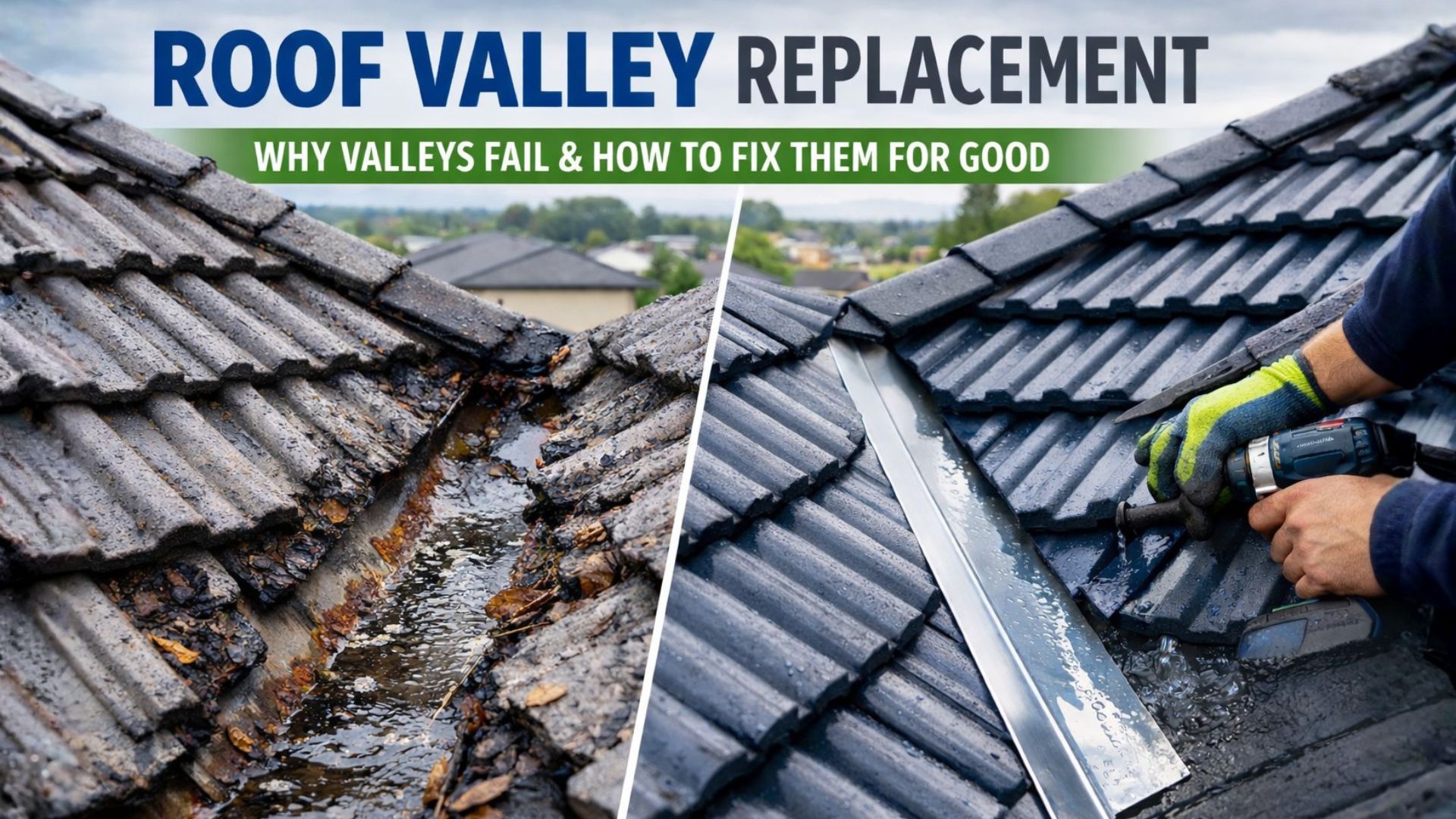
Roof Valley Replacement (1)

What is a Roof Valley (and Why is it So Vulnerable)?

Think of your roof as a series of watersheds. A roof valley is the internal angle formed where two roof slopes meet. Because of gravity, all the water hitting those two slopes funnels into this single channel.

During a heavy Sydney storm, a roof valley carries more water than any other part of your roof. Because it handles the highest volume of runoff, it is the first place to leak if the installation isn’t perfect.

The Anatomy of a Valley

Whether you have a terracotta tile roof or a modern Colorbond finish, the valley usually consists of:

  • The Valley Iron (or Flashing): The metal “V” channel that sits underneath the roofing material.
  • Bedding and Pointing: The mortar that seals the tiles against the valley (in tile roofs).
  • Overhang: How far the tiles or metal sheets extend over the valley.

4 Common Reasons Why Roof Valleys Fail

Many homeowners assume a Leaking Roof is just a sign of an “old house.” While age is a factor, most valley failures in Sydney stem from four specific culprits.

1. The “Leaf Trap” (Debris Buildup)

Sydney’s leafy suburbs are beautiful, but they are a roof valley’s worst enemy. Leaves, twigs, and bird droppings collect in the valley. This debris acts like a dam. Instead of water flowing into the gutters, it pools, backs up under your tiles, and rots your timber batten.

2. Rust and Corrosion

Most older Sydney homes use galvanized steel valley irons. Over 15–20 years, the protective coating wears off. Once rust sets in, it creates pinholes. You might not see a gushing leak, but a constant “weep” will slowly rot your ceiling joists.

3. Poor Original Installation

We often see valleys where the metal was cut too short or the “return” (the lip at the edge of the metal) wasn’t high enough. If the valley isn’t wide enough to handle high-volume water, it overflows into the roof cavity during a heavy storm.

4. Cracked Bedding and Pointing

On tile roofs, the mortar holding the tiles along the valley edge can crack due to the natural expansion and contraction of the house. Once that seal is broken, water finds a path inside.

Signs Your Roof Valley Needs Urgent Attention

You don’t need to climb a ladder to know you have a problem. Keep an eye out for these “red flags”:

  • Water Stains in Corners: Look at the ceilings directly below where two roof planes meet. Brown “coffee” stains are a dead giveaway.
  • Visible Rust: If you can see orange or brown streaks in your roof valleys from the ground, the metal is compromised.
  • Loose Mortar in Gutters: Finding chunks of cement in your gutters? That’s likely the bedding from your valleys washing away.
  • Damp Smells: A musty odor in the attic or upper floor often points to a slow, chronic valley leak that hasn’t quite breached the plasterboard yet.
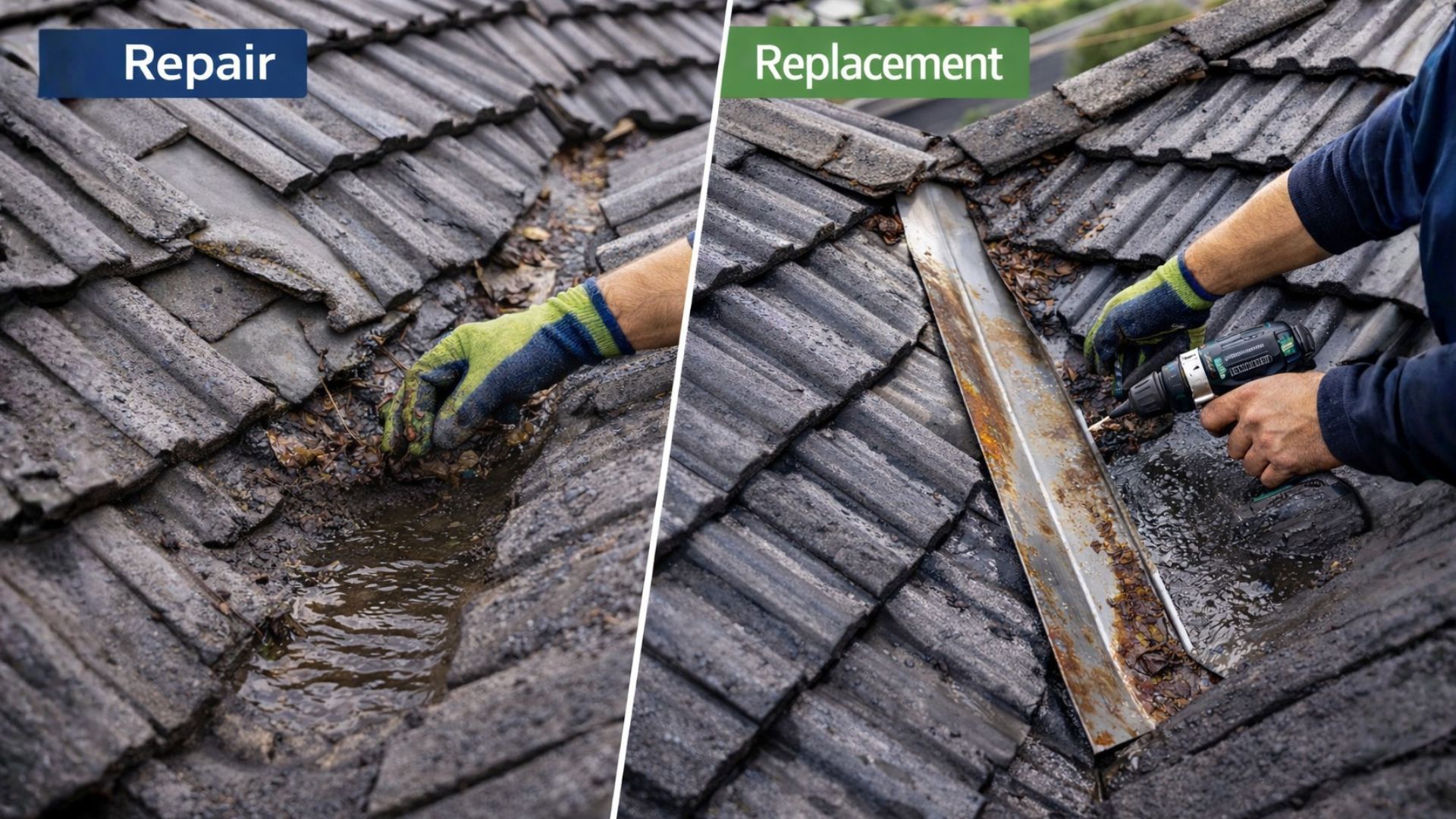
Roof Valley

Roof Valley Repair vs. Full Replacement: Which Do You Need?

Many homeowners ask, “Can’t you just patch it?” As experts in Roof Repairs Sydney, we always prioritize the most cost-effective long-term solution. Here is how we help you decide:

When to Roof Valley Repair:

  • The leak is caused purely by a debris blockage.
  • The valley iron is in perfect condition, but the mortar (pointing) has cracked.
  • The issue is a single broken tile overlapping the valley.

When to for Roof Valley Replacement:

  • The Metal is Rusted: You cannot “patch” rust. If there are holes, the entire length must be replaced.
  • Incorrect Pitch: If the original valley was installed with the wrong fall, it will always leak. Replacement is the only fix.
  • The Roof is Over 20 Years Old: If you are already doing significant Roof Repair, replacing the valleys is a smart “insurance policy” to prevent future leaks.

What Does a Professional Roof Valley Replacement Look Like?

If you hire a “handyman,” they might just slap some silicone over the leak. If you hire The Sydney Roof Doctor, we follow a rigorous process to ensure the leak never returns:

  1. Tile/Sheet Removal: We carefully remove the roofing material around the valley.
  2. Inspection of Sub-structure: We check the timber battens and sarking (insulation) for rot. If the wood is soft, we replace it.
  3. Custom Flashing Installation: We install high-quality, Australian-standard Colorbond or Zincalume valley irons with a high “rib” to prevent water overflow.
  4. Batten Protection: We apply “anti-capillary” strips to ensure water can’t be sucked back under the tiles.
  5. Re-bedding and Pointing: We reset the tiles using a flexible pointing compound that moves with your house, preventing future cracks.

The True Cost of Ignoring a Valley Leak

We understand that home maintenance isn’t cheap. However, a roof valley replacement is significantly more affordable than the alternative.

FactorRepairReplacement
CostLower upfrontHigher upfront
LongevityShort to mediumLong-term solution
EffectivenessTemporary in some casesPermanent fix
Best ForMinor issuesMajor or recurring problems

Expert Insight: A small leak in the valley doesn’t just damage the ceiling; it can short-circuit your electrical wiring and encourage black mold growth, a serious health risk for families.
Roof Valley Replacement Sydney

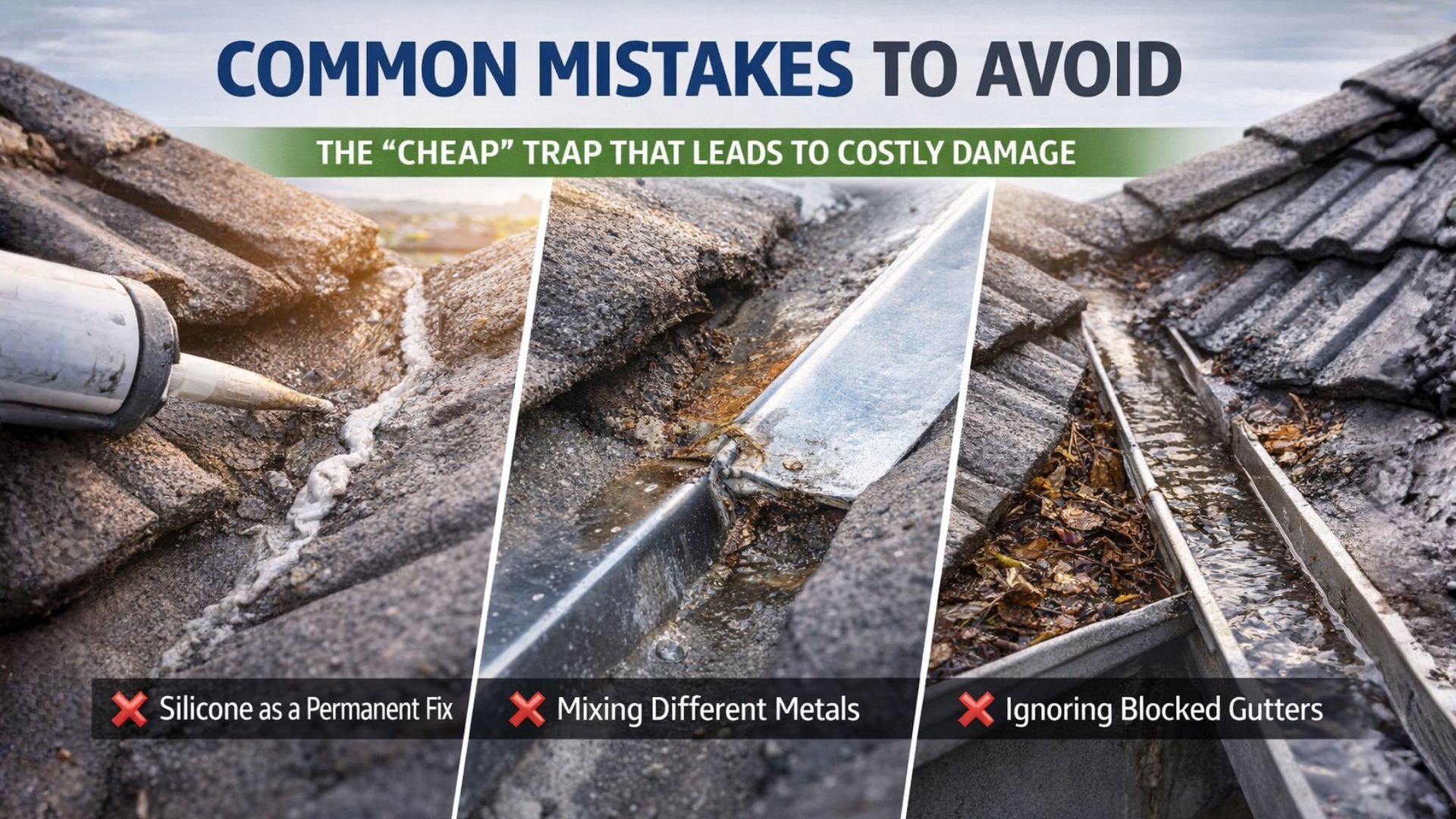
Common Mistakes to Avoid (The “Cheap” Trap)

In our 20+ years of experience, we’ve fixed many “repairs” done by others. Avoid these common pitfalls:

  • Using Silicone as a Permanent Fix: Silicone is a temporary sealant. It shrinks in the Sydney sun and will fail within months.
  • Mixing Metals: Never put a new aluminum valley against old galvanized parts; “galvanic corrosion” will eat through the metal faster than you can imagine.
  • Ignoring the Gutters: A valley replacement is useless if your gutters are blocked and water backs up into the new valley.

Professional vs. DIY: Can You Do It Yourself?

We’re all for a bit of DIY, but roof valleys are the “advanced level” of home maintenance.

  • The Safety Risk: Valleys are often the steepest part of the roof and require specialist harness equipment.
  • Technical Precision: Getting the “lead-out” and “overhang” measurements wrong by even 10mm can cause a catastrophic leak.
  • Warranty: A professional installation comes with a workmanship guarantee. A DIY job comes with a “cross your fingers” policy.

Why Timely Repairs Matter for Sydney Homeowners

Sydney’s climate is unique. We deal with intense UV rays that bake your roof, followed by sudden, high-volume “East Coast Low” storms. This cycle of extreme heat and flash flooding is brutal on roof valleys.

By addressing a [Roof Valley Replacement] early, you protect your home’s resale value and ensure your family stays dry during the next “Big Wet.”

Frequently Asked Questions

Q. How urgent is a roof valley leak?

It is a Priority 1 repair. Because valleys carry the most water, a leak here can cause significant internal damage in a single storm.

Q. How much does a roof valley replacement cost in Sydney?

Costs vary based on the length of the valley and the roofing material (tile vs. metal). Generally, a single valley replacement can range from $800 to $2,500. We provide detailed, transparent quotes after an on-site inspection.

Q. How long does the repair take?

Most replacements are completed within one day, depending on the weather and the size of the roof.

Q. Does my home insurance cover roof valley replacement?

Usually, insurance covers the resulting damage (like your ruined ceiling), but not the maintenance (the rusted valley itself). However, fixing the valley is required to prevent insurance from denying future claims.

Q. Can you replace a valley in the rain?

For safety and quality reasons, we cannot replace the metal during active rain. However, we do offer emergency tarping services to keep you dry until the weather clears.

Ready to Secure Your Roof?

Don’t wait for the next storm to turn a small drip into a major disaster. At The Sydney Roof Doctor, we specialize in identifying and fixing the most stubborn roof leaks.

Get a Free, No-Obligation Roof Inspection Today

Protect your home. Protect your family. Let the experts handle the heavy lifting.

The Truth About Skylight Repairs: Myths Debunking What Sydney Homeowners Think They Know

Noticed a stubborn damp patch on your ceiling after a classic Sydney downpour? Or perhaps you’re sitting in a dark living room, wishing for more natural light but terrified that installing a window in your roof is just an invitation for a flood.

If you’re searching for skylight repairs near me, you aren’t just looking for a handyman with a ladder. You’re looking for peace of mind. In Sydney’s unpredictable climate, where we swing from scorching 40°C summer days to torrential coastal storms, skylights take a beating.

At The Sydney Roof Doctor, we’ve seen it all. We know that for every homeowner who loves their skylight, there’s another who is hesitant because of “horror stories” they’ve heard from neighbors. Today, we’re stripping back the myths and giving you the professional reality of skylight maintenance, repair, and performance.

Skylight Repairs

Why Skylight Myths Are Costing You Money

Most homeowners delay necessary skylight repairs in Sydney because they believe common misconceptions. They think a small leak requires a full roof replacement, or they assume all skylights eventually leak (they don’t). This delay turns a $300 seal repair into a $3,000 internal ceiling restoration.

Understanding the “why” behind skylight issues is the first step to protecting your home’s value.

Myth 1: “All Skylights Will Eventually Leak”

This is the single biggest fear we encounter. It’s the reason people hesitate to add value to their homes with natural light.

The Reality: A skylight itself is rarely the “leaker.” High-quality modern units are engineered to be water-tight. When a leak occurs, it is almost always due to poor installation or failed flashing.

On Sydney roofs, whether they are terracotta tile, concrete tile, or Colorbond, the flashing is the metal skin that directs water away from the skylight. Over time, leaf debris can build up, causing water to dam and back up under the tiles. Regular maintenance and professional flashing checks prevent leaks entirely. If you have a leak, you likely don’t need a new skylight; you need expert roof repairs to fix the drainage around it.

Myth 2: “Skylights Make Your House a Sauna in Summer”

Sydney summers are brutal. Many homeowners believe that a skylight is essentially a giant magnifying glass heating up their furniture.

The Reality:

If your skylight was installed in 1995, this might be true. However, modern glazing technology has changed the game.

  • High-Performance Glazing: Modern units use Low-E coatings that reflect infrared light (heat) while letting in visible light.
  • Double Glazing: This creates an unconventional barrier that keeps heat out in summer and warmth in during winter.
  • Solar Tinting: For north-facing roofs, specific tints can reduce heat gain by up to 80%.

If your room feels too hot, it’s often a sign that the unit is outdated or the seals have failed, allowing hot air to seep in.

Myth 3: “If It Leaks, I Have to Replace the Whole Unit”

When homeowners see a drip, they see dollar signs. They assume the entire structural integrity of the roof is compromised.

The Reality:

In many cases, skylight repairs are localized. Common fixes include:

  • Resealing the Perimeter: Using industrial-grade, UV-resistant sealants.
  • Flashing Adjustment: Clearing debris and re-securing the metal surrounds.
  • Dome/Glass Replacement: If a hailstone cracked the top, many models allow you to replace just the glazing without touching the internal “shaft” or roof structure.

Skylight Repairs Near Me

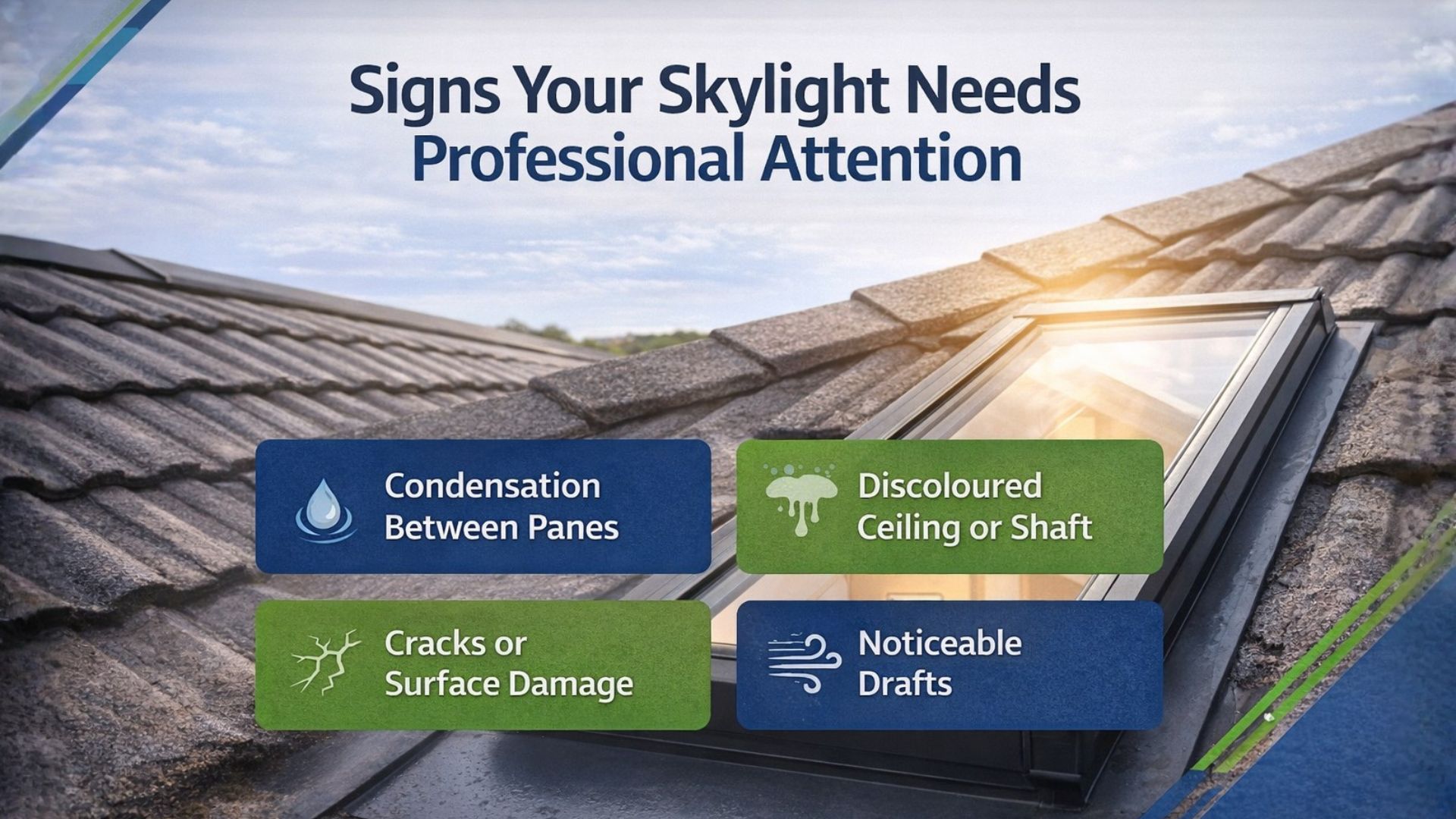
Signs Your Skylight Needs Professional Attention

Waiting for a puddle on the floor is waiting too long. Keep an eye out for these “silent” indicators that you need to search for roof repairs and skylight specialists:

  1. Condensation Between Panes: This indicates the vacuum seal in a double-glazed unit has failed. It ruins your view and your insulation.
  2. Discoloured Drywall: Look at the “tunnel” or shaft leading up to the skylight. Yellow or brown staining is a “smoking gun” for a slow leak.
  3. Cracks or Pitting: Sydney hailstorms can cause hairline fractures. You might not see them from the ground, but they expand with the heat.
  4. Drafts: If you can feel a breeze when the skylight is closed, your energy bills are literally flying out the roof.

Skylight Repairs vs. Full Replacement: The Decision Guide

How do you know when to patch and when to start over? Use this simple breakdown:

FeatureRepair It If…Replace It If…
AgeUnder 10 years old.Over 15–20 years old.
Glass ConditionMinor scratches or dirt.Cracked, shattered, or foggy (seal failure).
Leak CauseDebris buildup or loose flashing.Structural frame rot or warped unit.
TechnologyIt’s a modern, energy-efficient model.It’s a single-pane “acrylic dome” from the 80s.
CostFix is less than 30% of replacement cost.Frequent repairs are becoming a “money pit.”

What Causes Skylight Problems in Sydney?

Our local environment presents unique challenges that “one-size-fits-all” DIY guides don’t mention:

  • Salt Air Corrosion: If you live in Bondi, Manly, or Cronulla, salt spray can eat away at inferior metal flashings faster than inland suburbs.
  • Eucalyptus Debris: Heavy leaf fall from gum trees is acidic and can degrade seals if left to rot in the gutters around your skylight.
  • Thermal Expansion: Sydney’s rapid temperature shifts (from 35°C days to 18°C nights) cause roof materials to expand and contract. This “breathing” can loosen older screws and sealant bonds.

The Hidden Cost of DIY Skylight Repairs

We love a weekend warrior, but the roof is the one place where “giving it a go” can lead to catastrophe.

  • Safety Risks: Falling from a height is the leading cause of DIY injuries in Australia.
  • Incompatible Sealants: Using standard hardware-store silicone on certain roof membranes can cause chemical reactions that actually dissolve the seal.
  • Warranty Voiding: Most high-end brands like Velux or Fakro require certified installers to maintain their 10+ year warranties.

Pro Tip: If you’re searching for “skylight repairs near me,” ensure the contractor has specific experience with Sydney roof repairs. A plumber might fix a pipe, but a roofing specialist understands how water “creeps” across tiles during a storm.

Skylight Repairs Sydney

Step-by-Step: What to Do if Your Skylight is Leaking

  1. Clear the Area: Move furniture and electronics immediately.
  2. Contain the Water: Use a bucket, but don’t just leave it. If the ceiling is bulging, a tiny pin-prick hole can prevent the whole sheet of plasterboard from collapsing.
  3. Check the Roof (From the Ground): Use binoculars if you have them. Can you see a pile of leaves or a slipped tile near the skylight?
  4. Call a Specialist: Contact The Sydney Roof Doctor for a professional assessment. We use thermal imaging and moisture meters to find leaks that the naked eye misses.

Why Timely Repairs Matter (The Long-Term Impact)

A skylight leak isn’t just a water problem; it’s a structural problem.

  • Mould and Health: Damp shafts are breeding grounds for black mould, which can affect your family’s respiratory health.
  • Structural Rot: Water running down the internal rafters can rot the timber “trimmers” that hold your roof together.
  • Property Value: A stained ceiling is a massive “red flag” for building inspectors during a home sale, often knocking thousands off the final price.

Related Services & Resources

To keep your roof in peak condition, explore our other expert guides:

FAQs: Your Skylight Questions Answered

Q. How much do skylight repairs cost in Sydney?

Minor repairs like resealing or clearing debris usually range from $250 to $600. However, if the flashing needs replacing or there is structural damage, costs can increase. We provide transparent quotes after a physical inspection.

Q. How long does a typical repair take?

Most skylight repairs can be completed within 2 to 4 hours, assuming the weather is clear and parts are readily available.

Q. Can a leaking skylight be fixed from the inside?

No. While you can patch the ceiling inside for aesthetics, a leak must always be fixed from the outside. Applying silicone to the inside of a skylight just traps water inside your roof frame, causing timber rot.

Q. Are skylights high maintenance?

Not if they are installed correctly. A quick inspection once a year (usually during your gutter clean) to remove leaves and check the seals is all most modern units need.

Q. Does my home insurance cover skylight repairs?

If the damage is caused by a “sudden event” like a hailstorm or a fallen branch, you are likely covered. If the leak is due to “wear and tear” or lack of maintenance, insurance companies often deny the claim.

Conclusion: Don’t Let a Small Leak Dim Your Light

Skylights are one of the best investments you can make for your Sydney home, bringing in up to three times more light than a standard vertical window. Don’t let myths or fear of “the unknown” keep you in the dark.

If you suspect your skylight isn’t performing as it should, or you’ve spotted the first signs of a leak, act now. Secure your home’s value and your family’s comfort by hiring a specialist who knows Sydney roofs inside and out.

Ready for a brighter, leak-free home?

[Contact The Sydney Roof Doctor today for a professional Skylight Inspection.]

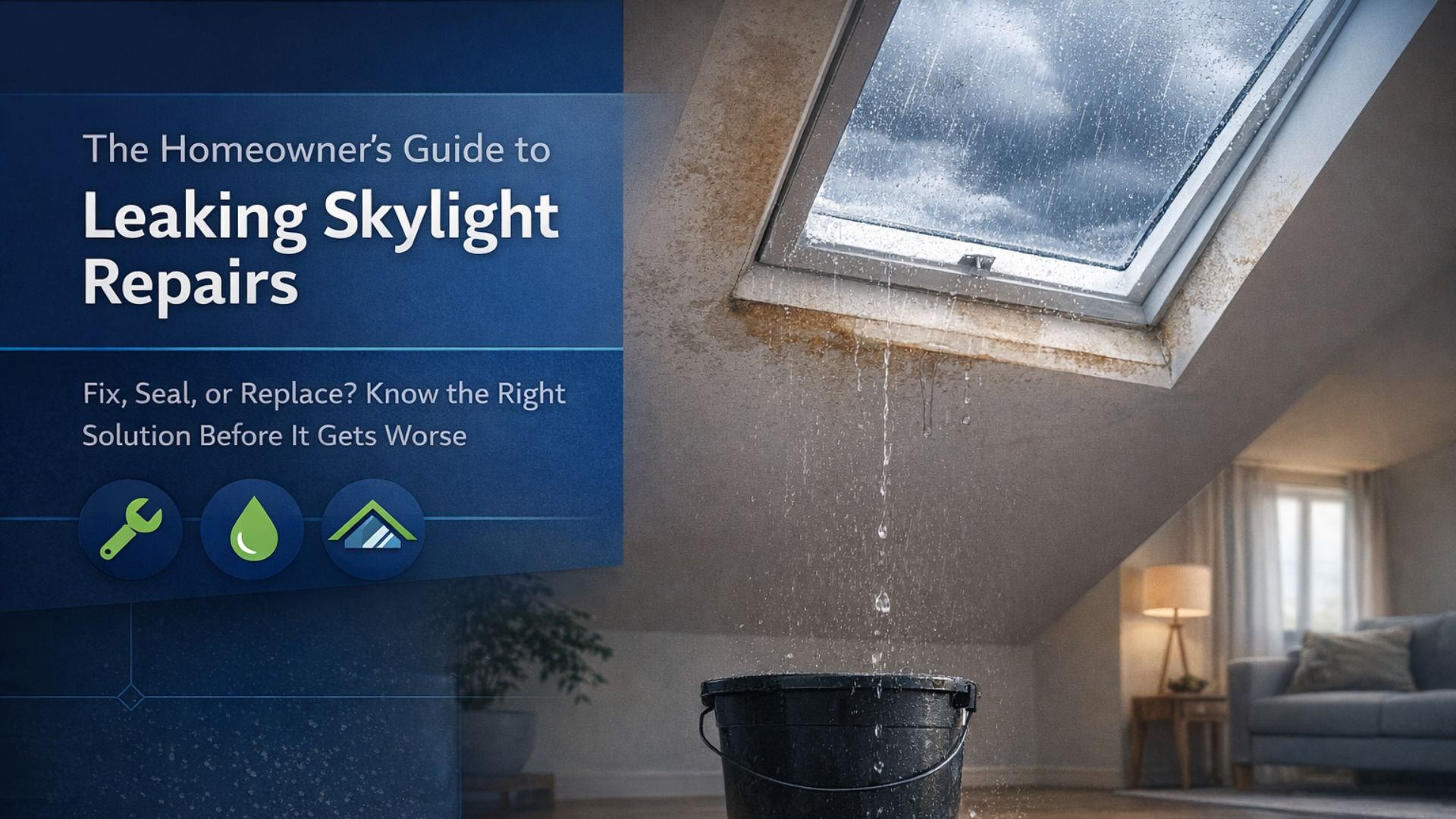
The Homeowner’s Guide to Leaking Skylight Repairs: Fix, Seal, or Replace?

Have you noticed a persistent drip after a Sydney thunderstorm, or perhaps a mysterious discolouration on the drywall surrounding your ceiling window?

A leaking skylight is more than a minor annoyance; it is a ticking clock. In a coastal city like Sydney, where salt air meets intense sun and sudden torrential rain, a small seal failure can quickly escalate into structural timber rot or hazardous mould growth.

If you’re wondering whether you can get away with a simple silicone patch or if you’re looking at a full structural replacement, you aren’t alone. Most homeowners oscillate between the fear of a massive repair bill and the desire to protect their biggest asset.

As experts at The Sydney Roof Doctor, we’ve spent over 20 years on Sydney rooftops. In this guide, we’ll break down the anatomy of a leak, the “Repair vs. Replace” debate, and how to ensure your home stays dry through the next big south-wester.

Skylight Repairs Sydney

What Causes a Skylight to Leak? (The Hard Truth)

Before you climb a ladder, you need to understand that a “leaking skylight” is rarely just about the glass. Because skylights are essentially a hole in your roof’s protective envelope, they are vulnerable to several points of failure.

1. Flashing Failure (The #1 Culprit)

The flashing is the metal skin that connects the skylight frame to the roof tiles or metal sheets. Over time, Sydney’s extreme temperature fluctuations cause metal to expand and contract. This can pull the flashing away from the base, creating a direct highway for rainwater.

2. Degraded Seals and Gaskets

The rubber gaskets holding the glazing in place are not immortal. After a decade of Australian UV exposure, these seals become brittle and crack. Once the “flex” is gone, water seeps through via capillary action.

3. Blocked Weep Holes

Most modern skylights are designed with tiny internal drainage channels called weep holes. If these become clogged with leaf litter, dust, or debris, the internal condensation or minor seepage has nowhere to go but down your lounge room wall.

4. Poor Original Installation

Unfortunately, we often see “Skylight Repairs Near Me” searches triggered by DIY attempts or general builders who didn’t understand roof pitches. If the “lap” of the tiles isn’t correct around the window, gravity will eventually win.

Signs of Skylight Damage You Should Never Ignore

Early detection is the difference between a $300 service and a $5,000 structural repair. Keep an eye out for these “silent” red flags:

  • Condensation Between Panes: If you see fogging inside double-glazed glass, the vacuum seal has failed. The unit is no longer insulating your home.
  • Yellow or Brown Staining: Water marks on the ceiling “flaring” out from the skylight shaft indicate a slow, persistent leak.
  • Cracked Glazing: Even a hairline fracture in acrylic or glass can expand rapidly during a Sydney hailstorm.
  • Dripping During High Winds: If it only leaks when the wind blows from the south, it’s likely a flashing or “back-pan” issue where water is being forced uphill under the tiles.

Repair vs. Replacement: How to Decide?

This is the most common question we receive at The Sydney Roof Doctor. Every homeowner wants to save money, but “cheap” repairs can often be a “band-aid on a bullet wound.”

FeatureRepair the LeakFull Replacement
Typical AgeSkylight is < 10 years old.Skylight is > 15 years old.
ConditionFlashing is loose; glass is intact.Frame is warped; glass is fogged/cracked.
CostLower upfront cost.Higher initial investment.
LongevityExtends life by 2–5 years.Resets the clock (20+ years).
Energy EfficiencyNo change.Significant improvement (Low-E glass).

Pro Tip: If your roof is being replaced or restored, always replace the skylights at the same time. The cost of labor is halved when the surrounding tiles or metal sheets are already removed.

Can You Just Replace the Glass?

Many homeowners ask if they can swap the cracked glass without touching the frame. While technically possible in some high-end modular systems, it is often not recommended.

If the seal has failed enough to damage the glass or let water in, the frame’s integrity is usually compromised too. Replacing just the glass often costs 70% of a full unit price but carries 0% of the long-term structural warranty.

Skylight Repairs Near Me

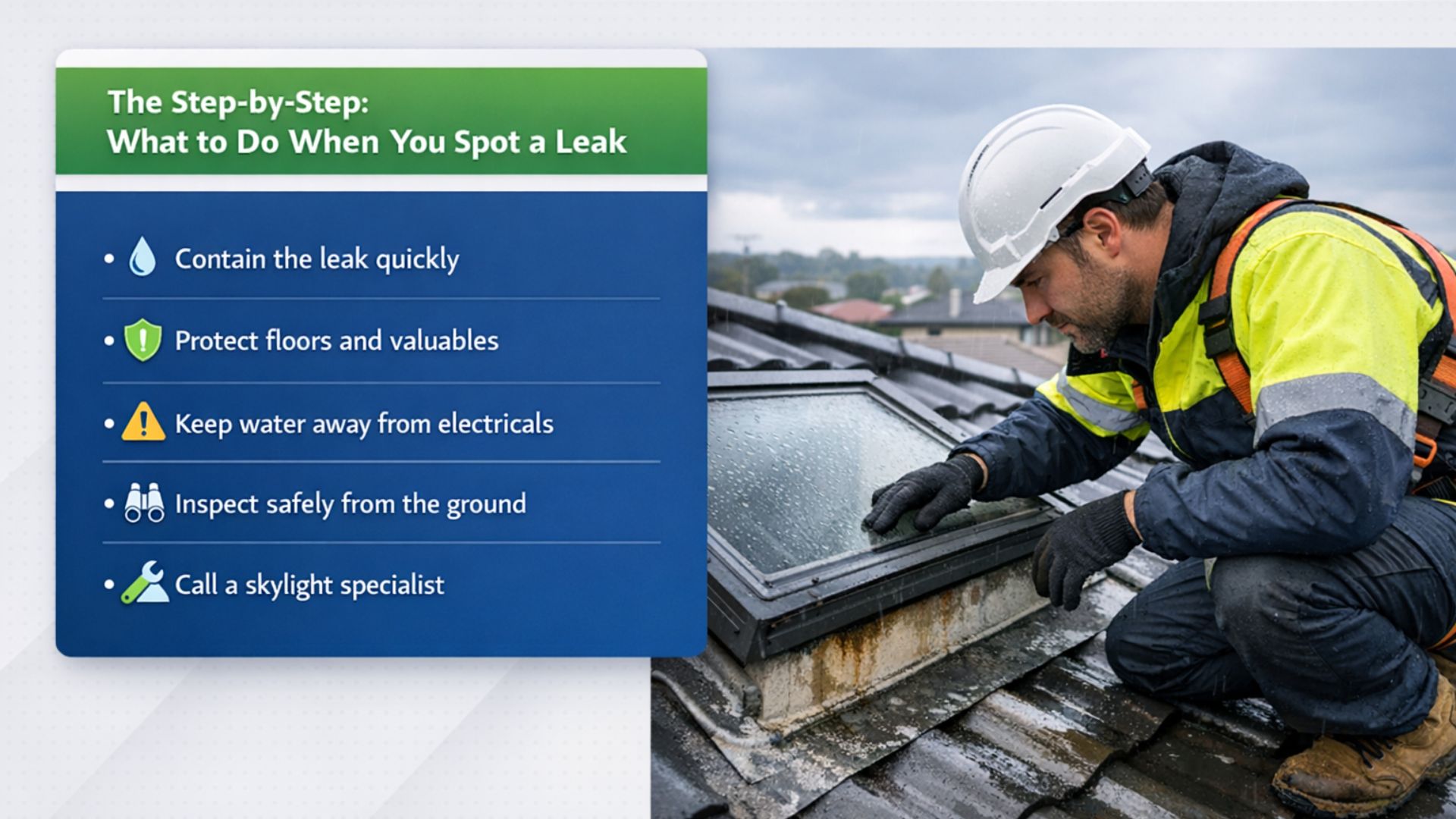
The Step-by-Step: What to Do When You Spot a Leak

If the clouds are grey and the drips are starting, follow this protocol:

  1. Contain the Damage: Place a bucket under the leak, but do not let water pool on timber floors. Use a “string guide” (taping a piece of string to the leak point) to direct water into the bucket if it’s splashing.
  2. Clear the Area: Move furniture and electronics. Water traveling down a skylight shaft often finds its way into light fittings, turning off the circuit if water is near electricals.
  3. Visual Inspection (From the Ground): Use binoculars to look for shifted tiles or built-up debris around the skylight.
  4. Call a Specialist: Avoid a general handyman. Skylight repairs require a specialist who understands both glazing and roof plumbing.

Cost Factors: What Drives the Price of Leaking Skylight Repairs?

The cost of Skylight Repairs in Sydney varies based on a few key “pain points”:

  • Roof Pitch: Steep roofs require scaffolding or safety harnesses, increasing labor time.
  • Roof Material: Repairing flashing on a Colorbond® roof is a different beast compared to Terracotta tiles.
  • Accessibility: Is it a single-story cottage in Marrickville or a three-story townhouse in Paddington?
  • Parts Availability: Older, discontinued brands often require custom-made flashing kits.

Common Mistakes Homeowners Make

Using “Gap Filler” or Silicone

The biggest mistake we see is a homeowner climbing up with a tube of hardware-store silicone. Silicone doesn’t bond well to aged acrylic or dirty tiles. It eventually shrinks, cracks, and traps water inside the frame, accelerating rot.

Ignoring the “Dry” Leaks

Sometimes a skylight “leaks” even when it isn’t raining. This is usually condensation. In poorly ventilated homes, warm moist air hits the cold glass and drips back down. You don’t need a repairman; you need better roof ventilation.

Why Timely Repairs Matter (The Long-Term Impact)

A leaking skylight is a gateway drug for roof failure. Beyond the aesthetic damage, water ingress affects:

  • Insulation Integrity: Wet insulation loses its R-value and becomes a breeding ground for mould.
  • Property Value: A “damp” smell or stained ceiling is a massive red flag during a building inspection.
  • Structural Safety: The “battens” and “rafters” holding your roof up are timber. Constant moisture leads to “wet rot,” which can compromise your entire roof’s stability.

Frequently Asked Questions

Q. How urgent is a skylight leak?

Extremely. Because water follows the path of least resistance, a drip in your lounge room could be traveling five meters along a structural beam from the actual source. Every rain event weakens your home’s bones.

Q. Can small skylight damage be ignored?

No. In Sydney’s climate, small cracks expand with the heat. What is a “small” issue in summer becomes a flooded room during the autumn storm season.

Q. How much do skylight repairs cost in Sydney?

Minor flashing repairs or seal replacements typically range from $450 to $950. A full high-quality replacement (like a Velux unit) including labor usually starts around $2,500+, depending on size and access.

Q. How long does a repair take?

Most leak repairs are completed within 2 to 4 hours. Full replacements typically take a full day.

Q. Is my leaking skylight covered by insurance?

Usually, insurance covers “sudden and accidental” damage (like a branch falling through it). They rarely cover “wear and tear” or “maintenance neglect” (like rusted-out flashing).

Expert Support for Your Sydney Home

Don’t let a minor drip turn into a major renovation. At The Sydney Roof Doctor, we specialise in identifying the root cause of leaks-whether it’s the flashing, the glass, or the installation itself.

If you’re worried about your skylight’s performance, we can provide a comprehensive inspection and a clear, fixed-price quote.

Ready to secure your home?

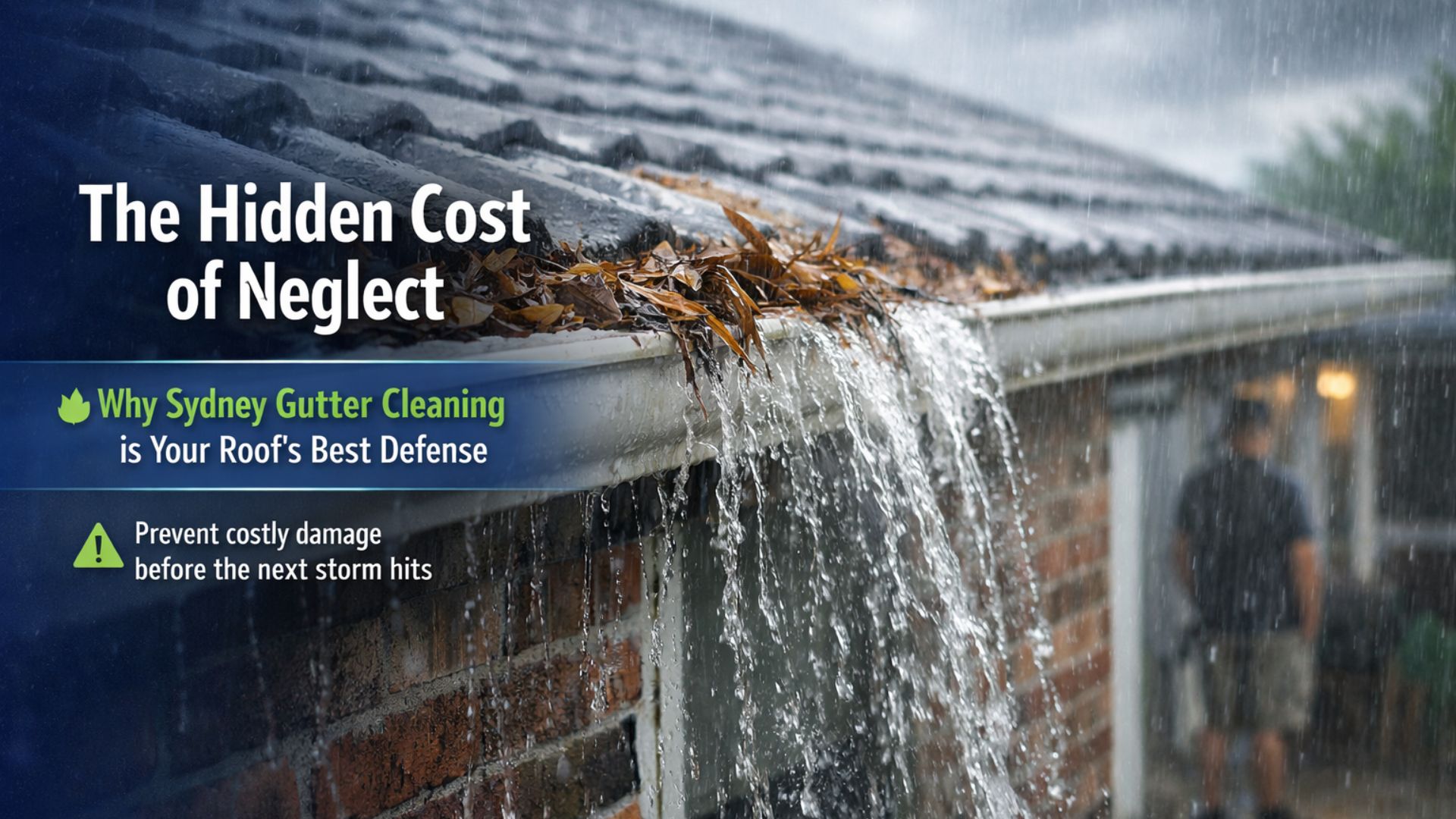
The Hidden Cost of Neglect: Why Sydney Gutter Cleaning is Your Roof’s Best Defense

Have you ever stood on your verandah during a classic Sydney summer thunderstorm, watching water cascade over the sides of your gutters like a backyard waterfall? It’s a common sight from Cronulla to Castle Hill, but while it might look like a minor overflow, it’s actually the opening act of a very expensive structural drama.

In a city where we swing from blistering heatwaves to intense East Coast Lows, your gutters are the unsung heroes of your home’s defense system. But when they’re packed with dry eucalypt leaves or sediment, they stop being a drainage system and start becoming a liability.

At The Sydney Roof Doctor, we’ve seen “simple” cleaning jobs turn into full-scale roof repairs simply because a homeowner waited one season too long. This guide breaks down exactly why Sydney gutter cleaning is the most cost-effective insurance policy you can buy for your home.

Sydney Gutter Cleaning

How Blocked Gutters Quietly Sabotage Your Home

Most homeowners view gutters as “out of sight, out of mind.” However, the physics of water management is unforgiving. When water cannot flow through your downpipes, it seeks the path of least resistance. Usually, that path leads directly into your home’s structural core.

1. The Backflow Effect (Roof & Fascia Damage)

When gutters are choked with debris, water pools and sits against the fascia boards (the timber or metal strips your gutters are attached to). Constant moisture causes timber to rot and metal to rust. Worse, the water often “wicks” upward into the roof sarking and insulation, leading to internal ceiling stains that seemingly appear out of nowhere.

2. Foundation Erosion and Shifting

This is the “silent killer” of Sydney properties. When gutters overflow, water falls directly next to your home’s foundation rather than being piped away. Over time, this saturates the soil, causing it to expand and contract unevenly. In suburbs with reactive clay soils, this leads to:

  • Cracked internal plaster.
  • Doors and windows that suddenly stick.
  • Structural subsidence that costs tens of thousands to underpin.

3. The “Home Health” Crisis: Mould and Pests

Sydney’s humidity is the perfect incubator for mould. Damp gutters and water-damaged walls create a breeding ground for spores that can migrate into your air conditioning system. Furthermore, stagnant water is a five-star hotel for mosquitoes, cockroaches, and-most dangerously-termites, who are attracted to the moisture-softened timber of a neglected roofline.

Signs Your Gutters Are Already Causing Damage

You don’t always need a ladder to know there’s a problem. Keep an eye out for these “red flags” during your next weekend garden session:

  • The “Tiger Stripe” Effect: Dark, vertical streaks on the outside of your gutters. This indicates consistent overflowing.
  • Birds and Pests: If you see birds frequently landing on your roofline or pecking at the gutters, they’re likely finding a feast of insects living in the organic “mulch” inside.
  • Sagging Gutters: Gutters are designed to carry water, not kilos of wet sludge. If they look like they’re pulling away from the roof, the brackets are failing under the weight.
  • Peeling Paint: Check the paint on your fascia boards or the exterior walls directly under the gutters. Bubbling or peeling paint is a primary indicator of moisture ingress.

Why Sydney Weather Makes Maintenance Non-Negotiable

We live in a unique climate. Between the salt air of the Northern Beaches and the heavy leaf fall in the leafy North Shore, Sydney gutters face a double threat.

The Fire Risk

During the dry months, those blocked gutters aren’t a flood risk-they’re a fire risk. Dry leaves and twigs are the primary ignition point for ember attacks during bushfire season. A clean gutter can literally be the difference between a house standing or lost.

The Storm Surge

Sydney is prone to “microbursts”-sudden, intense rainfall. If your gutters are 50% blocked, they will fail 100% of the time during an intense storm. This is when the most significant roof repair issues occur, as the sheer volume of water forces its way under the tiles or metal sheeting.

Professional Gutter Cleaning vs. DIY: An Honest Comparison

It’s tempting to grab a ladder on a Sunday morning and do it yourself. Here’s the reality of the two approaches:

FeatureDIY ApproachProfessional (The Sydney Roof Doctor)
SafetyHigh risk (falls from heights are a leading cause of home injury).Trained, insured, and equipped with safety harnesses.
ThoroughnessUsually just the “big bits” are removed.Full flush of downpipes and debris removal from the site.
InspectionHard to spot structural issues without an expert eye.Includes a multi-point roof health check to spot leaks early.
EquipmentBuckets and a garden hose.High-powered vacuums and industrial-grade pressure tools.

Pro Tip: Many insurance companies may deny a water damage claim if it’s proven that the damage was caused by a lack of maintenance (i.e., blocked gutters). Professional receipts are your proof of “due diligence.”

Step-by-Step: What Happens During a Professional Sydney Gutter Clean?

When you book a specialist, you aren’t just paying for someone to “scoop leaves.” Here is the standard of excellence we maintain:

  1. Site Assessment: We identify high-risk areas, such as valleys where different roof sections meet.
  2. Manual Debris Removal: Large debris is removed by hand or industrial vacuum to prevent further downpipe clogs.
  3. The Downpipe Flush: We test every single downpipe. If water doesn’t flow freely to the stormwater drain, we clear the blockage.
  4. The Roof Health Check: While we are up there, we look for cracked tiles, rusted valleys, or failing pointing. This is where we catch roof repair needs before they become emergencies.
  5. Clean-Up: We don’t leave your garden a mess. All gutter “sludge” is bagged and removed.

Repair vs. Replacement: Making the Right Call

Sometimes, cleaning isn’t enough. If your gutters have reached the end of their lifespan, you need to decide between a patch-up or a fresh start.

  • Repair if: You have a single localized leak, a loose bracket, or one rusted section in an otherwise healthy system.
  • Replace if: There are multiple holes, widespread rust, or if the gutters are “back-falling” (sloping the wrong way due to age and structural shifts).

Modern Colorbond gutters are a popular choice in Sydney because they are treated to withstand the coastal salt spray and the harsh UV of the Australian sun.

Gutter Cleaning Sydney

Cost Factors: What Should You Expect to Pay?

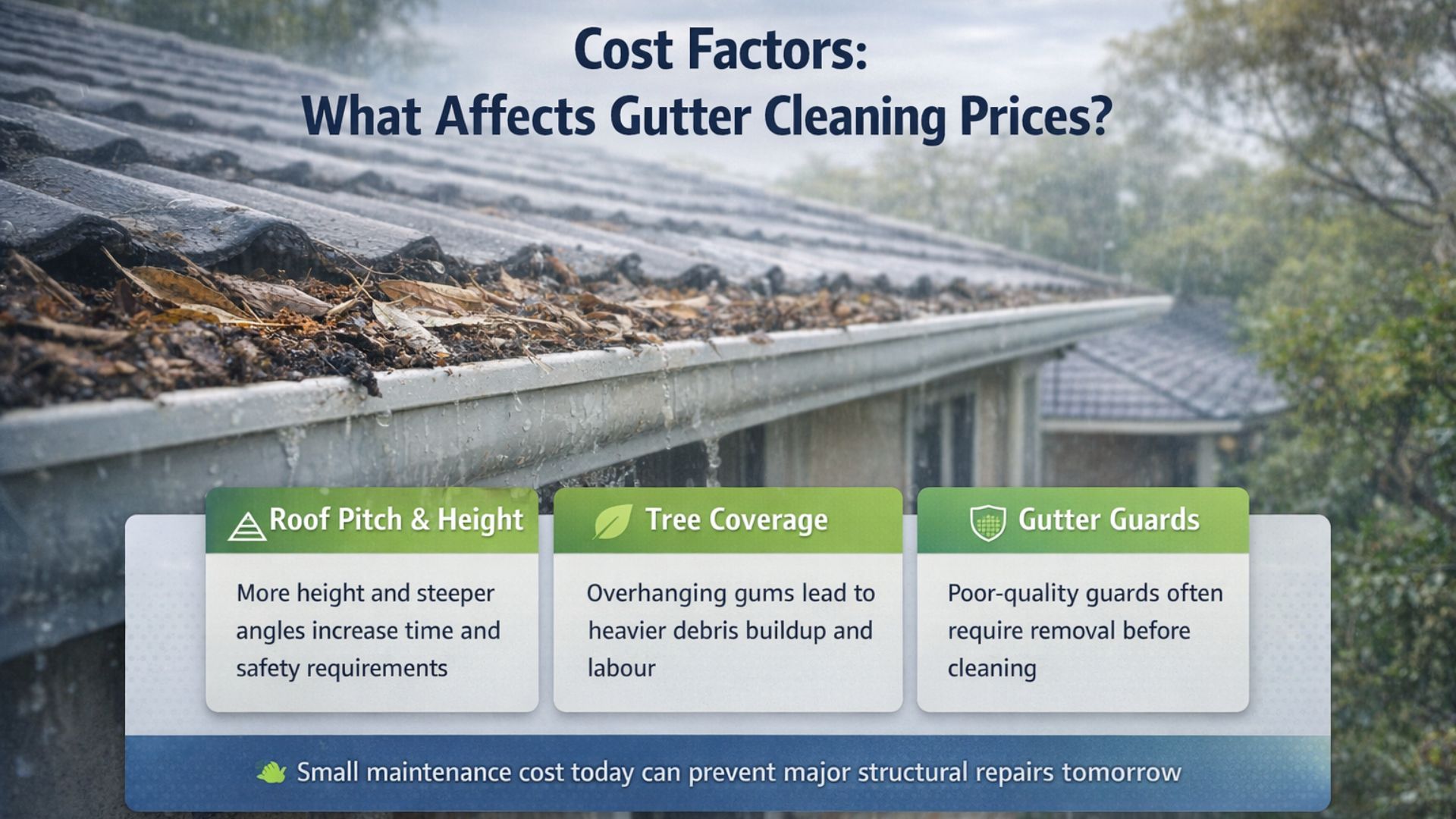
We believe in transparency. In Sydney, gutter cleaning prices usually fluctuate based on three things:

  1. Roof Pitch & Height: Two-story homes or steeply pitched roofs require more safety equipment and time.
  2. Tree Coverage: A home surrounded by overhanging Gums will require more intensive labor than a clear block.
  3. Gutter Guards: Ironically, poor-quality gutter guards often make cleaning harder because they have to be removed and reinstalled to get the silt out from underneath.

While it might cost a few hundred dollars for a professional clean, a foundation repair or a full roof restoration can easily run into the tens of thousands.

Common Mistakes Homeowners Make

  • Installing “Cheap” Gutter Guards: Many “brush” or “clip-on” guards actually trap debris and make it impossible for gutters to dry out, accelerating rust.
  • Ignoring Downpipes: Clearing the gutters but leaving the downpipes blocked is like cleaning a sink but leaving the drain plugged.
  • Waiting for a Leak: If you wait until you see a damp patch on your ceiling, the damage is already done. Prevention is always cheaper than a cure.

The Long-Term Impact: Protecting Your Property Value

In the Sydney real estate market, “deferred maintenance” is a massive red flag for buyers. When a building inspector sees clean gutters and a well-maintained roofline, it signals that the entire home has been cared for. Regular Sydney gutter cleaning isn’t just about water; it’s about protecting your biggest financial asset.

Frequently Asked Questions

Q. How often should I have my gutters cleaned in Sydney?

For most Sydney suburbs, twice a year-once in late autumn and once before the summer storm season. If you live in a heavily wooded area like Wahroonga or the Blue Mountains, quarterly is recommended.

Q. Can blocked gutters really cause a roof leak?

Absolutely. When water cannot go down, it goes up. It flows under the tiles or metal sheets, soaks the insulation, and eventually roams across your ceiling until it finds a light fixture or a seam to drip through.

Q. How long does a professional gutter clean take?

For a standard three-bedroom single-story home, it usually takes between 1.5 to 3 hours, depending on the level of debris.

Q. Is it worth getting gutter guards?

Only if they are high-quality, integrated mesh systems. Even then, they require occasional “flushing” to remove fine silt and dust that builds up over time.

Q. What happens if my downpipes are blocked underground?

This is a more serious plumbing issue. We can often clear the top-level blockage, but if the issue is deeper (like tree roots in the pipes), we will refer you to a specialized drainage plumber.

Conclusion: Don’t Let a Small Clog Become a Big Bill

A blocked gutter is a ticking time bomb for your home’s structure. From the integrity of your roof to the stability of your foundation, everything relies on getting water away from your house as quickly as possible.

By prioritizing Sydney gutter cleaning, you’re not just clearing out leaves; you’re preventing mould, deterring pests, and avoiding the high costs of emergency roof repairs.

Is your home ready for the next Sydney storm? Don’t wait for the clouds to turn grey. Contact The Sydney Roof Doctor today for a free, no-obligation gutter health check and professional cleaning quote.

Whirly Bird Installation Guide for Australian Homes: A Practical Walkthrough

Hot building? You’re not alone. Many Australian buildings trap heat in the roof space. By late afternoon, it feels unbearable. The air sits. The ceiling radiates heat. Energy bills climb.

That’s where the Whirly Birds installation comes in. Simple idea. Big impact. These roof ventilators spin with the wind and pull hot air out. No power needed.

In this guide, we’ll break it down. What they are. When you need them. And how they’re installed. No fluff. Just clear, practical insight you can actually use.

Whirly Birds installation

What Are Whirly Birds and Why They Matter

Think of a whirly bird as your roof’s exhaust fan. It sits on top and spins with the breeze. As it turns out, it pulls hot, stale air out of your roof space.

Sounds simple. It is. But the results? Noticeable.

Here’s what they help with:

  • Less heat indoors. Your rooms stay cooler, especially upstairs
  • Better airflow. No more trapped, heavy air
  • Lower energy use. The air conditioner system doesn’t have to work as hard
  • Protection from moisture. Helps prevent mould and damp issues

In Australia’s climate, heat builds fast. Without ventilation, it has nowhere to go. That’s the real problem.

When Should You Consider Whirly Birds Installation

Not sure if you need one? Look for the signs.

  • Your home stays hot even after sunset
  • Cooling bills feel higher than they should
  • The ceiling feels warm to the touch
  • There’s a musty smell in certain rooms
  • You’ve noticed condensation or damp patches

Sound familiar? Then your roof probably isn’t breathing properly.

Many older Australian homes weren’t built with modern ventilation in mind. Over time, that becomes a comfort issue. And a cost issue.

Step-by-Step Whirly Birds Installation Process

Let’s walk through how it’s actually done. No guesswork. No shortcuts.

  • Roof inspection and placement planning

First, the roof is assessed. Size matters. So does layout. Placement is planned carefully to get the best airflow.

  • Marking and cutting the roof opening

A clean opening is marked and cut. Precision here is critical. Too loose, and you risk leaks.

  • Securing the base and flashing

The base is fitted and fixed into place. Flashing is added to keep water out. This step protects your roof.

  • Installing the turbine head

The spinning unit is attached. It must rotate freely. No resistance.

  • Sealing and weatherproofing

Every edge is sealed. Properly. This is what keeps your home dry during heavy rain.

  • Final testing and airflow check

The unit is tested. Airflow is checked. Everything must work smoothly before the job is done.

It’s a straightforward process. But every step matters.

Why Professional Installation Makes a Difference

Here’s the truth. This is not just a cut-and-fit job.

Get it wrong, and you risk:

  • Water leaks
  • Poor airflow
  • Structural damage

That’s why professional installation matters.

An experienced roofer knows:

  • Where to place units for maximum effect
  • How to seal properly against the Australian weather
  • How to work safely without damaging the roof

Done right, it works quietly in the background. Done wrong, it causes problems.

Whirly Birds

Why Homeowners Trust The Sydney Roof Doctor

When it comes to Whirly Birds installation, experience shows.

The Sydney Roof Doctor understands local conditions. Heat. Rain. Wind. All of it.

Homeowners rely on us because:

  • We know Australian roofs inside out
  • We don’t rush the job
  • We focus on long-term results, not just quick repairs
  • Our process is consistent and reliable

It’s not about installing a product. It’s about getting the outcome right.

Frequently Asked Questions

Q. How many Whirly Birds do I need?

It depends on your roof size and layout. Most homes need more than one for proper airflow.

Q. How long does installation take?

Usually, a few hours. It can vary depending on the roof type and access.

Q. Do Whirly Birds work in winter?

Yes. They help remove moisture and keep air moving year-round.

Q. Can they be installed on all roof types?

Yes, in most cases. Tile and metal roofs are both suitable with the right approach.

Q. Are Whirly Birds noisy?

No. When installed correctly, they run quietly. Noise usually points to a problem.

Conclusion

A hot, uncomfortable home doesn’t have to be the norm. Often, the issue starts on the roof. And the repair is simpler than you think.

Whirly Birds installation helps your home breathe. It reduces heat. Improves airflow. And makes everyday living more comfortable.

But the real difference comes from doing it properly. That’s where experience matters.

If you’re noticing the signs, it might be time to act. The Sydney Roof Doctor can assess your roof and guide you toward a solution that actually works. Not just now, but for the long run.

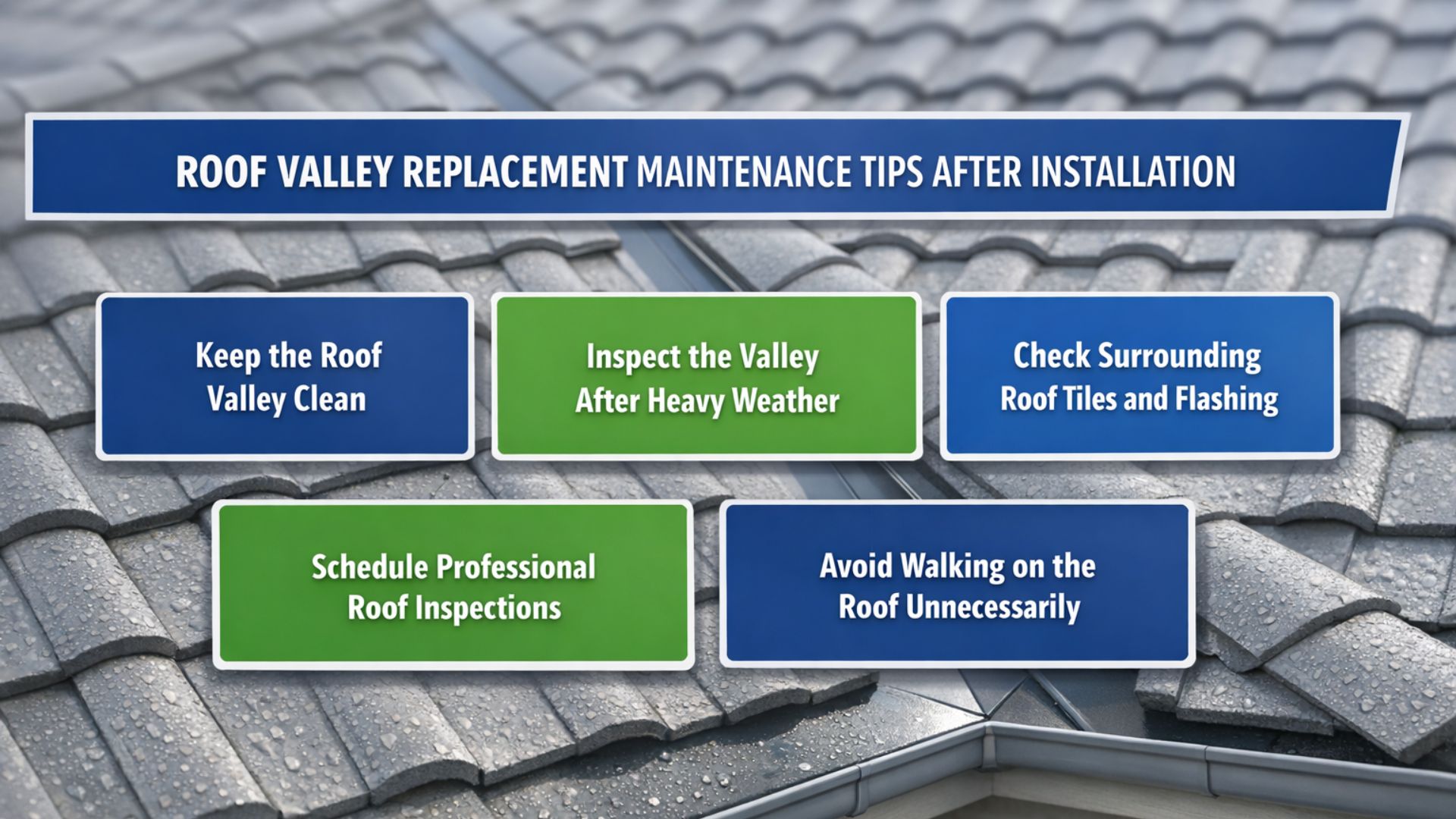
Roof Valley Replacement Maintenance Tips After Installation

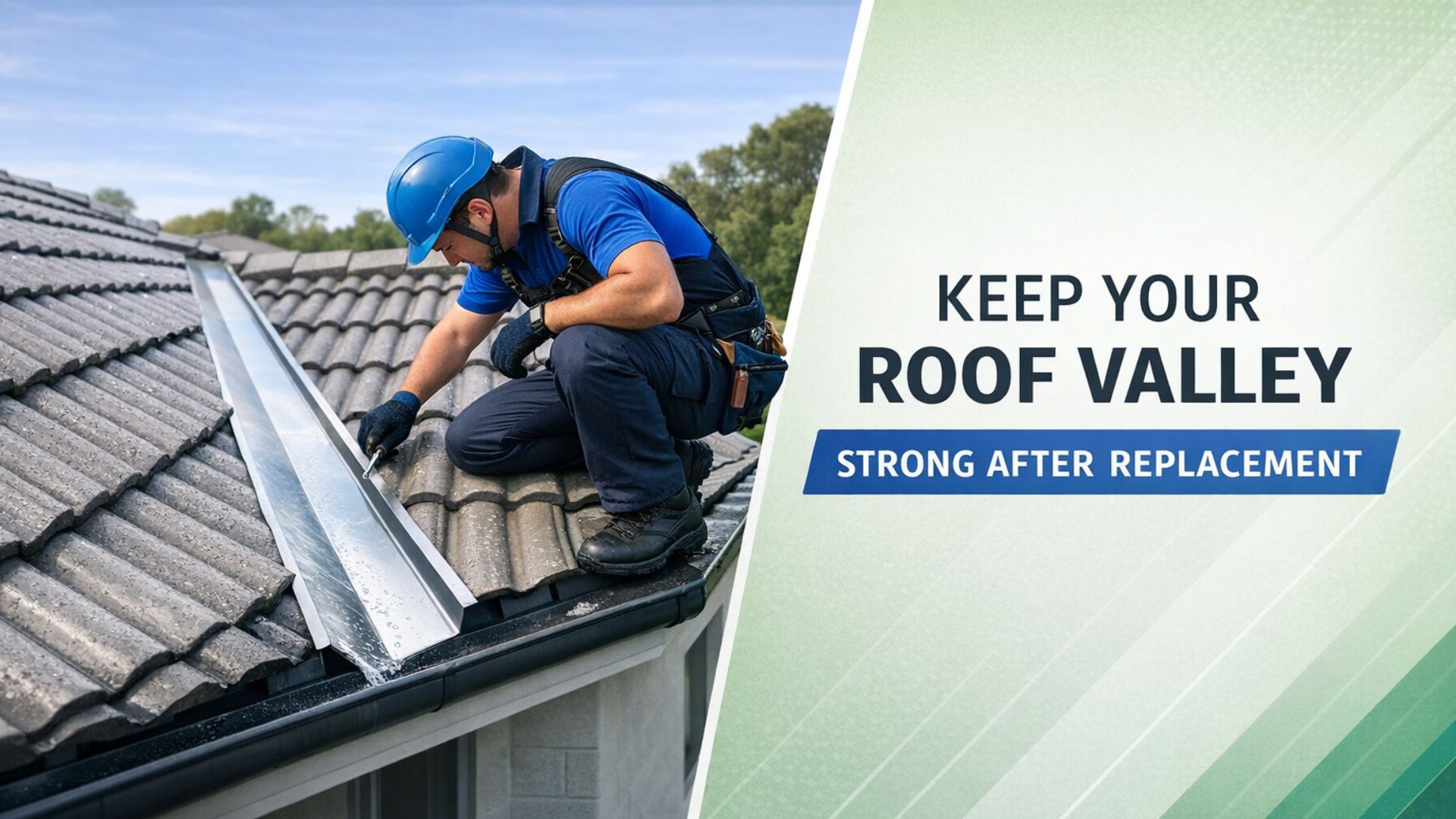
A roof valley is one of the most important yet often overlooked parts of a roofing system. It is responsible for directing rainwater safely from the roof down to the gutters. Because this area handles a large amount of water flow during heavy rain, it must stay in excellent condition to prevent leaks and structural damage. After a professional installation, homeowners should follow proper maintenance practices to extend the life of their roof. Regular care after roof valley replacement ensures your roof continues protecting your home for many years.

Roof Valley Replacement

Why Roof Valley Maintenance Matters

Roof valleys naturally collect rainwater, debris, and sometimes dirt from surrounding roof sections. Because of this constant exposure, they tend to wear out faster than other parts of the roof. If debris builds up or minor damage goes unnoticed, water may start pooling or leaking into the roof structure. Over time, this can lead to expensive structural problems or the need for major Roof Repair work.

Proper maintenance after installation keeps the valley functioning as intended and helps avoid unnecessary Roof Repairs in the future.

1. Keep the Roof Valley Clean

One of the simplest yet most effective maintenance steps is regular cleaning. Leaves, twigs, and dirt can accumulate in the valley and block water flow. When water cannot drain properly, it may seep under the tiles or roofing materials.

Cleaning the valley periodically ensures that rainwater flows freely into the gutter system. It also prevents rust or moisture buildup that could lead to future Roof Repair issues.

Homeowners should check the valley, especially after storms or during autumn, when debris tends to collect quickly.

2. Inspect the Valley After Heavy Weather

Strong winds, storms, and heavy rainfall can affect roofing materials over time. Even after a professional installation, it is wise to visually inspect the roof valley after extreme weather events.

Look for signs such as:

  • Loose roof tiles
  • Rust forming on metal flashing
  • Water stains on ceilings or walls

These signs may indicate early damage that requires immediate attention. Addressing such issues early can prevent larger and more costly Roof Repairs later.

3. Check Surrounding Roof Tiles and Flashing

A roof valley works together with nearby roof tiles and flashing. If surrounding tiles shift or break, they can expose the valley to water damage.

Regularly checking the tiles around the valley helps ensure everything stays aligned and secure. If you notice cracked tiles or gaps, scheduling a quick Roof Repair can prevent water from reaching the underlayment or roof structure.

Roof Valley Replacement service

4. Schedule Professional Roof Inspections

While basic checks can be done by homeowners, professional inspections provide a more detailed assessment. Roofing specialists can identify early signs of wear that might not be visible from the ground.

Including your valley in routine inspections is especially important because valleys handle concentrated rainwater flow. Professionals can also check sealing, flashing, and tile placement to ensure everything is functioning properly.

For homeowners in Sydney, The Sydney Roof Doctor provides thorough inspections and expert solutions to keep roofs performing at their best.

5. Avoid Walking on the Roof Unnecessarily

Walking on the roof without proper knowledge can damage tiles or disturb the valley installation. Heavy pressure may crack tiles or loosen materials around the valley area.

If maintenance work is needed, it is always safer to hire experienced professionals rather than attempting DIY fixes that could lead to additional roof repairs.

Trusted Roofing Support from The Sydney Roof Doctor

When it comes to maintaining your roof, professional expertise makes all the difference. The Sydney Roof Doctor specialises in roof inspections, valley replacements, and reliable roofing solutions designed for Sydney’s climate.

Their experienced team uses high-quality materials and proven techniques to ensure every installation lasts for years. Whether you need maintenance, inspections, or expert roof repair, their specialists provide dependable service and practical advice for homeowners.

Final Thoughts: A well-installed roof valley protects your home by directing rainwater safely away from your roof structure. However, installation is only the first step. Regular cleaning, inspections, and timely repairs are essential to keep the system working efficiently.

By following these simple maintenance tips and working with trusted professionals like The Sydney Roof Doctor, homeowners can extend the lifespan of their roofing system and avoid costly damage. Consistent care after roof valley replacement ensures your roof stays strong, secure, and ready to handle every season.

Top 7 Common Causes of Roof Leaks in Sydney Homes

It starts with a tiny, tea-coloured stain in the corner of the ceiling. Or perhaps a rhythmic drip-drop sound behind a wall during one of those classic Sydney East Coast Lows.

For many homeowners in the Northern Beaches, the Inner West, or the leafy Hills District, a leaking roof is often a problem that has been brewing for months—if not years—before it finally makes an appearance inside your living room.

In our 30+ years at The Sydney Roof Doctor (TSRD), we’ve seen it all. From heritage terraces in Paddington with crumbling mortar to modern family homes in Baulkham Hills battered by summer hailstorms. The reality is that Sydney’s climate is unique; our roofs have to contend with intense UV radiation, salty coastal air, and sudden, violent downpours that dump weeks’ worth of rain in a matter of hours.

If you’ve discovered a leak, you’re likely feeling a mix of frustration and financial anxiety. The good news? Most leaks are predictable and preventable. In this guide, we’ll break down the top 7 causes of roof leaks we see across NSW and, more importantly, what you can do to stop the damage before it costs you a fortune in structural repairs.

Leaking Skylight Repairs

Quick Summary: The “Too Wet to Read” Checklist

If you’re currently holding a bucket under a drip, here is the shorthand version of why your roof is failing:

  • Blocked or rusted gutters: The #1 cause of “backflow” into the eaves.
  • Broken or slipped tiles: Often caused by foot traffic or storm debris.
  • Failed Flashing: The metal “weatherproofing” around chimneys and vents has cracked.
  • Clogged Valleys: Debris creates a dam, forcing water under the tiles.
  • Ageing Bedding & Pointing: The mortar holding your ridge tiles is crumbling away.

1. Blocked or Damaged Gutters (The Silent Flooder)

In Sydney’s leafier suburbs—think Wahroonga, Beecroft, or Castle Hill—trees are the primary enemy of a dry home. When your gutters fill with leaves, twigs, and silt, they can no longer funnel water to the downpipes.

During a heavy storm, that water has nowhere to go. It pools in the gutter, rises, and eventually flows backwards under your roof sheets or tiles and into your fascia and eaves.

The Sydney Scenario:

Many homeowners assume gutters are fine because they can’t see the debris from the ground. However, we often find “mud” (decomposed organic matter) weighing down the brackets, causing the gutter to sag. This creates a permanent pool of water that eventually rusts through the metal, leading to a localized leaking roof right above your external walls.

2. Cracked or Slipped Roof Tiles

Whether you have terracotta or concrete tiles, they are incredibly durable—but they aren’t invincible. Over time, the expansion and contraction caused by Sydney’s 35°C+ summer days followed by cool nights can cause hairline fractures.

Why it happens:

  • Storms: High winds can lift tiles or drop heavy branches on them.
  • Maintenance traffic: Satellite dish installers or solar panel technicians who aren’t “roof-literate” often step on the “weak spots” (the pans) of the tiles rather than the “strong spots” (the laps), causing hidden cracks.

A single cracked tile might only let in a few spoonfuls of water per storm. But over a year, that water rots your timber battens and soaks your insulation, eventually leading to a sagging ceiling.

3. Damaged or Aged Roof Flashing

Flashing is the unsung hero of your roof. It’s the thin strip of metal (usually lead, zinc, or aluminium) installed at the transition points of your roof—around chimneys, skylights, dormer windows, and where the roof meets a wall.

Flashing is designed to be a water-tight seal. However, as your house settles or as the metal expands/contracts in the sun, the sealant can crack, or the metal itself can pull away from the brickwork.

Expert Tip: If you notice a leak specifically near your chimney or a skylight, 90% of the time, the issue is the flashing, not the roof tiles themselves.

4. Deteriorating Bedding and Pointing

If you look at the “peak” of your roof (the ridge), you’ll see triangular tiles held in place by what looks like cement. This is your bedding (the structural mortar) and pointing (the flexible top coat).

In older Sydney homes, the original lime-based mortar eventually shrinks and cracks. Once the pointing fails, water can seep into the ridge. Even worse, the ridge tiles can become loose. During a high-wind event, these loose tiles can shift or blow off entirely, leaving your roof wide open to the elements.

Roof Leak Repair Sydney

5. Debris in Roof Valleys

A roof “valley” is the internal angle where two roof slopes meet. It’s essentially a high-volume water highway. Because these valleys are the lowest point of the roof’s planes, they collect everything: leaves, tennis balls, and bird nests.

When a roof valley is blocked, it acts like a dam. The water builds up and “overtops” the sides of the valley tin, running directly into your roof cavity. This is a common cause of roofing repairs in Sydney following the autumn leaf drop.

6. Failed “Penetrations” (Vents and Pipes)

Your roof is likely punctured by several pipes—plumbing vents, exhaust fans, and whirlybirds. Each of these has a “boot” or a collar designed to keep water out.

The rubber used in these collars is prone to “UV rot.” After 10 years in the harsh Australian sun, the rubber becomes brittle and splits. Because these pipes are often located directly above bathrooms or kitchens, you’ll notice damp spots on the ceiling in those specific rooms.

7. Condensation and Poor Ventilation

Sometimes, a leaking roof isn’t actually a leak from the outside—it’s “attic rain.”

In many Sydney homes, especially those with modern ducted air conditioning, the temperature difference between the hot roof space and the cool house creates massive amounts of condensation. If your roof lacks proper ventilation (like solar vents or eave vents), this moisture builds up on the underside of the roof sheets and drips onto the ceiling. It looks exactly like a leak, but the solution is airflow, not more sealant.

How to Spot a Leak Before the Ceiling Falls In

You don’t need to climb a ladder to do a basic “health check” on your property. Every six months, take a walk around your yard with a pair of binoculars and look for these red flags:

  1. The “Lighthouse” Effect: If you can safely get into your manhole (roof hatch) during the day, turn off the lights. If you see pinpricks of daylight, water can get in there.
  2. External Wall Stains: Look for “weep marks” or green algae growth on your exterior brickwork. This often indicates overflowing gutters.
  3. Debris on the Ground: Finding small pieces of red terracotta or grey concrete on your driveway? That’s a sign your tiles are “spalling” or breaking apart.
  4. Sagging Gutters: Look at the “line” of your gutters. If they aren’t straight, they are likely holding heavy water and debris.

Leaking Roof

The Cost of Waiting: Why “Patch Jobs” Fail

We often hear from homeowners who tried to fix a leak with a tube of silicone from the local hardware store. While it might stop the drip for one or two rains, it’s a “Band-Aid” on a wound that needs stitches.

Silicone doesn’t bond well to old, dusty roof tiles or rusted metal. Eventually, the water finds a way around it. Meanwhile, the timber frame of your house is absorbing moisture, which attracts termites and encourages black mould growth—both of which are far more expensive to fix than a standard roof repair.

FAQs: Leaking Roofs in Sydney

Q. How much does a roof leak repair cost in Sydney?

It varies depending on the cause. A simple tile replacement or minor gutter clearing might cost a few hundred dollars. However, full ridge recapping or replacing rusted valleys can range from $1,500 to $4,000+. At The Sydney Roof Doctor, we provide a detailed quote after a physical inspection so there are no surprises.

Q. Does home insurance cover roof leaks?

Generally, insurance covers “sudden and accidental” damage (like a tree falling on your roof during a storm). Most policies do not cover “gradual wear and tear” or “lack of maintenance.” If your roof leaks because your gutters were full of leaves, your claim might be denied.

Q. Can I clean my own gutters?

If you have a single-storey home and the right safety equipment, yes. However, for two-storey homes or steep pitches, the risk of falls is high. Professional services like ours use industrial vacuums and have the insurance to work at heights safely.

Q. How often should I have my roof inspected?

In Sydney, we recommend a professional inspection every 12 to 18 months, ideally before the summer storm season begins in October.

Q. Why Choose The Sydney Roof Doctor (TSRD)?

When you call TSRD, you aren’t getting a salesperson; you’re getting a specialist who understands the nuances of Sydney’s architecture. From the heritage-listed homes of the Inner West to the sprawling estates of the North Shore, we provide:

  • Comprehensive Leak Detection: We don’t just find the drip; we find the source.
  • Strata & Commercial Expertise: We work closely with strata managers to provide compliant, long-term maintenance.
  • Full Clean-Up: We treat your property like our own. No leftover nails, no tile off-cuts, and no mess in your garden.
  • Transparent Reporting: We take photos of the damage before we start and the repairs after we’re done, so you know exactly what you paid for.

Don’t Wait for the Next Big Storm

A small leak today is a major renovation tomorrow. Protect your biggest asset and ensure your family stays dry year-round.

Would you like me to book a comprehensive roof health check or provide an obligation-free quote for your Sydney property? [Contact The Sydney Roof Doctor Today]

How Roof Valley Replacement Prevents Roof Leaks & Structural Damage

A Sydney Homeowner’s Practical Guide

After a heavy Sydney downpour, many homeowners notice it for the first time – a brown stain forming near the corner of the ceiling.

It’s not directly under a broken tile. It’s not near a skylight. It’s often along an internal wall.

In many cases, the cause isn’t the tile itself.

It’s the roof valley.

If you’ve been dealing with recurring leaks or searching for Roof Valley Replacement, this guide explains:

  • What a roof valley actually does
  • Why valleys fail in Sydney conditions
  • How failure leads to serious structural damage
  • When replacement is necessary (not just patching)
  • How professional repair prevents long-term issues

This isn’t a sales pitch. It’s practical guidance from experience working across Sydney’s Eastern Suburbs, North Shore, Inner West and Hills District.

What Is a Roof Valley – And Why Is It So Important?

A roof valley is the internal channel where two roof slopes meet.

It carries a large volume of rainwater from both sides of the roof down into the gutter system.

In simple terms:

  • Tiles shed water toward the valley
  • The valley directs water downward
  • Gutters carry it away from the home

Because valleys collect concentrated water flow, they’re one of the most vulnerable parts of the entire roof system.

When they fail, leaks are rarely minor.

Roof Valley Replacement

Why Roof Valleys Fail in Sydney Homes

Many Sydney homeowners don’t realise that valleys take more punishment than any other roof component.

1. Leaf Build-Up in Tree-Heavy Suburbs

In areas like Wahroonga, Lane Cove and Baulkham Hills:

  • Gum leaves accumulate quickly
  • Debris traps moisture
  • Water pools instead of draining

Over time, this accelerates rust.

Blocked valleys are one of the leading causes of Roof Leak Repair Sydney callouts.

2. Coastal Corrosion

In Sydney’s Eastern Suburbs and coastal areas:

  • Salt air speeds up metal deterioration
  • Valley flashing corrodes faster
  • Protective coatings break down sooner

Metal valleys exposed to salt air often have a shorter lifespan.

3. Incorrect Installation

Common mistakes include:

  • Nails driven too low in the valley
  • Incorrect overlaps
  • Poor sealing at the top join
  • Inadequate sarking (underlay) protection

When nails are placed in the water channel, rust develops around them. Eventually, water enters directly through the fastener point.

4. Thermal Expansion & Contraction

Sydney’s hot summers and cool nights cause:

  • Metal expansion
  • Movement at joins
  • Sealant separation

Over time, small gaps form. During heavy rain, those gaps become leak points.

What Happens If a Roof Valley Fails?

This is where many articles stop at “you’ll get a leak.”

In reality, the damage escalates quickly.

Stage 1: Water Entry

Water enters beneath tiles and into the sarking layer.

Stage 2: Insulation Saturation

Insulation absorbs water like a sponge.

This reduces thermal efficiency and encourages mould.

Stage 3: Timber Rot

Battens and rafters begin to soften.

Rot weakens structural integrity.

Stage 4: Internal Damage

  • Ceiling plaster stains
  • Paint peels
  • Cornices crack
  • Electrical risk increases

Left untreated, a failed valley can cause thousands in internal repair costs.

Roof Leak Repair Sydney

Can You Patch a Roof Valley – Or Does It Need Replacement?

This is one of the most common questions we hear.

Minor Issues May Allow Repair

If the valley has:

  • Small isolated rust spots
  • Debris blockage
  • Localised flashing separation

Then cleaning and resealing may be possible.

Replacement Is Required When:

  • Rust has penetrated through metal
  • Multiple holes are visible
  • Water is entering repeatedly
  • Nails are rusting out
  • The valley is over 20 years old

Temporary patching over advanced rust is rarely a long-term solution.

Professional Roof Valley Replacement ensures the entire water channel is secure – not just sealed superficially.

How Roof Valley Replacement Works

At The Sydney Roof Doctor (TSRD), valley replacement follows a structured process.

Step 1: Tile Removal Around the Valley

Tiles are carefully lifted without causing additional cracking.

Step 2: Old Valley Removal

The rusted or damaged valley flashing is removed entirely.

Step 3: Inspection of Sarking & Battens

We check:

  • Timber condition
  • Moisture damage
  • Underlay integrity

If the sarking is compromised, it must be addressed before installing the new valley.

Step 4: New Valley Installation

We install high-quality Colorbond or appropriate metal valleys designed for Sydney conditions.

Proper overlaps and water flow alignment are critical.

Step 5: Tile Reinstallation & Final Inspection

Tiles are repositioned correctly, ensuring water flows cleanly into the new valley channel.

Why Proper Valley Replacement Prevents Future Roof Leaks

A professionally installed valley:

✔ Handles heavy Sydney downpours
✔ Prevents water backflow under tiles
✔ Eliminates rust-related entry points
✔ Reduces strain on gutters
✔ Protects structural timbers

When combined with gutter maintenance, valley replacement significantly reduces the need for emergency Leaking Roof Repairs Sydney.

Leaking Roof Repairs Sydney

The Hidden Role of Gutters in Valley Failure

Why do gutters overflow during Sydney storms?

Because valleys channel massive water volume into them.

If gutters are blocked:

  • Water backs up
  • It pushes up the valley channel
  • It spills under tiles

Valley replacement without addressing gutter maintenance only solves half the problem.

Regular gutter cleaning is essential.

Roof Valley Lifespan in Sydney

Typical valley lifespan:

  • 15–25 years (depending on material & environment)

Factors affecting lifespan:

  • Coastal exposure
  • Tree debris
  • Maintenance frequency
  • Installation quality

If your home is over 20 years old and hasn’t had valley work done, inspection is strongly recommended.

Signs Your Roof Valley May Need Replacement

Look for:

  • Rust visible in the valley channel
  • Debris build-up that doesn’t drain
  • Ceiling stains near internal walls
  • Persistent leaks despite tile repairs
  • Water marks along fascia

If these signs are present, patch repairs may not be enough.

Roof Valley Replacement vs Full Roof Replacement

Many homeowners worry valley issues mean a full roof replacement.

In most cases, that’s not true.

If tiles are structurally sound and only the valley has failed, targeted valley replacement is cost-effective and practical.

Full roof replacement is only necessary when:

  • Widespread tile deterioration exists
  • Structural timber damage is extensive
  • Multiple roof systems are failing simultaneously

An experienced roofer will explain the difference clearly.

Cost Considerations for Sydney Homes

Roof Valley Replacement costs vary based on:

  • Roof height
  • Accessibility
  • Valley length
  • Extent of surrounding damage
  • Tile condition

Straightforward valley replacement is significantly less expensive than repairing internal structural damage caused by prolonged leaks.

Early intervention always saves money.

Insurance & Storm Damage

Is roof valley replacement covered by insurance?

Often yes – if damage is sudden and storm-related.

Insurance may not cover:

  • Gradual rust
  • Neglected maintenance

Proper inspection reports and documentation help support claims.

Roof Valley Inspection Checklist for Sydney Homeowners

Use this annually:

✔ Check for rust along valley channel
✔ Ensure water flows freely during rain
✔ Inspect for leaf accumulation
✔ Look for ceiling staining after storms
✔ Check ridge caps for displacement
✔ Confirm gutters aren’t overflowing

If you’re unsure about safe access, professional inspection is safer and more accurate.

Why Experience Matters in Valley Work

Valleys are precision components.

Incorrect installation can:

  • Direct water under tiles
  • Create pooling
  • Cause premature rust

The Sydney Roof Doctor works specifically with Sydney’s weather patterns, roof types and suburban conditions.

Understanding how valleys behave during heavy rainfall is not theoretical – it comes from on-site experience.

Strata & Commercial Considerations

For strata managers and commercial property owners:

  • Valley failure can affect multiple units
  • Water can spread across shared roof sections
  • Compliance and safety standards must be met

Regular roof maintenance plans reduce liability and emergency callouts.

Frequently Asked Questions – Sydney Roof Valleys

Q. How long does a roof valley last in Sydney?

Typically 15–25 years. Coastal homes may experience shorter lifespans due to salt exposure.

Q. Can I patch a rusted valley?

Small surface rust may be treatable. Penetrated rust requires replacement for long-term protection.

Q. Why does my leak appear far from the valley?

Water travels along rafters before dripping. Entry points are often not directly above visible stains.

Q. Does replacing the valley stop all leaks?

If the valley is the source, yes. However, flashing and gutter conditions must also be inspected.

Q. How often should valleys be inspected?

Annually and after major storms.

Q. Preventing Structural Damage Starts at the Roof

Many Sydney homeowners don’t think about their roof valleys until there’s visible damage.

By then:

  • Insulation may be wet
  • Timber may be deteriorating
  • Mould may be forming

Proactive valley inspection and replacement protect:

  • Property value
  • Internal finishes
  • Electrical safety
  • Long-term roof lifespan

When to Contact The Sydney Roof Doctor

If you’re noticing:

  • Ceiling stains
  • Recurring leaks near internal walls
  • Rust visible in valley channels
  • Overflowing gutters during rain

It’s worth arranging a professional assessment.

The Sydney Roof Doctor provides experienced Roof Valley Replacement, Roof Leak Repair Sydney, and broader roof maintenance services across:

  • Eastern Suburbs
  • North Shore
  • Inner West
  • Hills District
  • Inner City

Clear advice. Proper diagnosis. Long-term solutions.

Final Thought

A roof valley is just a strip of metal – until it fails.

Then it becomes the main pathway for water into your home.

Replacing a deteriorated valley before it causes internal damage isn’t just maintenance – it’s structural protection.

If your home is older, located in a tree-heavy suburb, or exposed to coastal conditions, a valley inspection may prevent far more expensive repairs later.

Sydney weather is unpredictable.

Your roof shouldn’t be.

Roof Leak Repair Checklist for Sydney Suburbs

A Practical Guide for Homeowners Before, During & After a Leak

A brown stain appears on the ceiling after heavy rain.

You wipe it down. It dries.

Then the next storm hits – and it spreads.

Across Sydney suburbs – from the Eastern Suburbs to the Hills District – this is often how roof problems begin. Not dramatic. Not obvious. Just a slow warning sign that water has found a way in.

If you’re searching for Roof Repairs Sydney, chances are you’re dealing with a leak – or you want to prevent one before winter storms roll in.

This checklist is designed specifically for Sydney homeowners, landlords and strata managers. It explains:

  • What to check immediately
  • Why leaks are so common in Sydney conditions
  • How to prevent repeat damage
  • When professional Roof Leak Repairs Sydney are essential

Let’s walk through it properly.

Why Sydney Roofs Are More Vulnerable Than You Think

Sydney homes deal with:

  • Intense UV exposure year-round
  • Sudden heavy downpours
  • Wind-driven coastal storms
  • Leaf build-up in leafy suburbs
  • Expanding and contracting roof materials

Over time, these conditions weaken tiles, flashing, valleys and pointing.

Many Sydney homeowners don’t realise that small movement in roof materials can create tiny gaps – and that’s all water needs.

Roof Repairs Sydney

The Sydney Roof Leak Repair Checklist

Use this checklist if:

  • You’ve noticed a ceiling stain
  • Water drips during rain
  • Gutters overflow
  • Your roof hasn’t been inspected in years

Step 1: Identify the Internal Warning Signs

Before climbing anywhere, start inside.

Look for:

  • Brown or yellow ceiling stains
  • Bubbling paint near cornices
  • Sagging plasterboard
  • Damp smells in roof cavities
  • Mould forming in corners
  • Water dripping during storms

Important: The leak point inside rarely matches the entry point on the roof. Water can travel along rafters before dripping.

If you see active dripping, move furniture and protect flooring immediately.

Step 2: Check Gutters & Downpipes (From the Ground)

Blocked gutters are one of the leading causes of Roof Leak Repairs Sydney.

From ground level, check for:

  • Overflowing gutters during rain
  • Plants or visible debris growing from gutters
  • Sagging gutter sections
  • Water spilling behind fascia boards

In leafy suburbs like Wahroonga, Lane Cove, or the North Shore, gutters can block quickly.

When gutters back up, water pushes under tiles and into the roof cavity.

If gutters are clearly full, cleaning may resolve the issue before structural damage worsens.

Step 3: Inspect Roof Tiles or Metal Sheets (Safely)

Do not climb onto the roof unless trained and equipped.

From ground level or a safe vantage point, look for:

For Tiled Roofs:

  • Cracked tiles
  • Slipped ridge caps
  • Gaps in pointing
  • Broken hip caps

For Metal Roofs:

  • Loose screws
  • Rust patches
  • Lifting sheet edges
  • Failed sealant joints

Sydney’s temperature swings cause roofing materials to expand and contract daily. Over time, fixings loosen.

Step 4: Check Flashings Around Roof Penetrations

Flashings are the metal strips around:

These are high-risk areas for leaks.

If flashing lifts, rusts, or separates, water flows underneath and into insulation.

Many emergency Roofing Repairs Sydney calls involve failed flashing – especially after storms.

Step 5: Inspect Roof Valleys

Roof valleys are the internal channels where two roof slopes meet.

They handle large volumes of water.

Common Sydney issues:

  • Rusted metal valleys
  • Debris build-up
  • Separation at joins
  • Water pooling

Valley failure often causes major leaks because of the water volume involved.

If valleys are rusted through, replacement is usually necessary – patching is temporary.

Roof Leak Repairs Sydney

Step 6: Consider Recent Weather Events

Ask yourself:

  • Was there a strong windstorm recently?
  • Did branches hit the roof?
  • Has heavy rain occurred after a dry spell?

Storm damage is one of the main triggers for urgent Roof Repairs Sydney.

Even one dislodged ridge cap can create entry points.

Step 7: Check the Roof Cavity (If Safe)

If you have safe access:

Look for:

  • Wet insulation
  • Water trails along timber
  • Mould on rafters
  • Daylight visible through tiles

Use a torch – never step on plasterboard ceilings.

If insulation is saturated, professional attention is required quickly to prevent rot.

Why Small Roof Leaks Become Big Problems

Many Sydney homeowners delay repairs.

Common thought: “It’s only a small stain.”

What happens next:

  • Insulation becomes waterlogged
  • Timber battens begin to rot
  • Electrical wiring risks increase
  • Mould spreads
  • Ceiling plaster weakens and collapses

The cost of internal repairs often exceeds the cost of early Roof Leak Repairs Sydney.

Sydney Suburbs: Unique Roof Leak Risks

Different areas present different challenges.

Eastern Suburbs & Coastal Areas

  • Salt air accelerates corrosion
  • Metal flashing deteriorates faster

North Shore & Hills District

  • Heavy tree coverage
  • Constant leaf debris
  • Moss growth in shaded roofs

Inner West & Older Suburbs

  • Ageing tile roofs
  • Original cement pointing cracking
  • Poor previous repairs

Local experience matters. Not every roof behaves the same.

When DIY Stops Being Safe

It’s understandable to want to fix minor issues yourself.

However:

  • Walking on tiles cracks more of them
  • Incorrect sealants trap moisture
  • Improper valley patching redirects water
  • Slips and falls are common

Professional roofers don’t just repair – they diagnose correctly.

At The Sydney Roof Doctor (TSRD), leak detection focuses on finding the true entry point, not just the visible damage.

Preventative Roof Maintenance Checklist (Annual)

Even if you’re not dealing with a leak right now, this yearly checklist reduces risk:

✔ Clean gutters at least twice yearly
✔ Inspect ridge caps and pointing
✔ Replace cracked tiles promptly
✔ Check flashing seals
✔ Trim overhanging branches
✔ Schedule a professional roof inspection before winter

Preventative care extends roof lifespan significantly.

How Much Do Roof Leak Repairs Cost in Sydney?

Costs vary based on:

  • Roof type
  • Access difficulty
  • Height and pitch
  • Extent of damage
  • Valley or flashing replacement needs

Typical minor repairs (tile replacement, resealing flashing) are relatively straightforward.

More complex issues (valley replacement, extensive re-pointing) require more labour.

The key is transparency and proper diagnosis – not the cheapest quote.

Questions Sydney Homeowners Often Ask

Why does my roof only leak during heavy rain?

Heavy downpours expose weaknesses in flashing, valleys or blocked gutters that light rain may not trigger.

Can one broken tile really cause a leak?

Yes. Even a hairline crack allows water through during sustained rain.

Is roof repointing necessary?

If ridge cap mortar is cracking, repointing prevents water entry and wind displacement.

Modern flexible compounds last longer than old cement mortar.

Should I replace my entire roof if it leaks?

Not usually. Most leaks are localised and repairable if addressed early.

Full replacement is only required when structural deterioration is widespread.

How often should Sydney roofs be inspected?

Annually – and after major storms.

Why Choosing the Right Roofing Specialist Matters

If you’re comparing providers for Roofing Repairs Sydney, consider:

  • Do they inspect the entire roof system?
  • Do they explain the root cause clearly?
  • Do they provide photo documentation?
  • Are they experienced across Sydney suburbs?
  • Are they insured and compliant?

Accurate diagnosis prevents repeat call-outs.

Roofing Repairs Sydney

When to Contact The Sydney Roof Doctor

If you notice:

  • Ceiling stains
  • Dripping during rain
  • Overflowing gutters
  • Cracked ridge caps
  • Rusted flashing
  • Persistent damp smells

Don’t wait for internal damage to worsen.

The Sydney Roof Doctor provides experienced Roof Repairs Sydney services across the Eastern Suburbs, North Shore, Inner West, Hills District and Inner City.

The focus is simple:

Clear diagnosis.
Reliable repair.
Long-term protection.

Final Word: Prevention Is Always Cheaper Than Water Damage

Most Sydney roof leaks begin as small issues:

A blocked valley.
A cracked tile.
Loose flashing after wind.

Left untreated, they become structural problems.

Using this checklist regularly – especially before storm season – protects:

  • Your property value
  • Your insurance position
  • Your family’s safety
  • The lifespan of your roof

If you’re unsure about the condition of your roof, a professional inspection offers peace of mind.

Sydney weather doesn’t wait.

And neither should roof leaks.

Emergency Roof Leak Repairs: What Sydney Homeowners Need to Know

A heavy Sydney downpour.
Wind pushing rain sideways.
Then you notice it , a dark stain spreading across the ceiling.

For many homeowners in the Eastern Suburbs, North Shore, Inner West and Hills District, this is how roof problems first reveal themselves. Not with a dramatic collapse. Not with tiles falling off.

Just a quiet drip that turns into a costly repair if ignored.

If you’ve been searching for Leaking Roof Repairs Near Me, this guide will help you understand:

  • Why roof leaks are so common in Sydney
  • What causes them in our local conditions
  • What to do immediately during an emergency
  • How professional roof repairs prevent long-term damage
  • When to call an experienced specialist like The Sydney Roof Doctor (TSRD)

Let’s break it down properly.

Leaking Roof Repairs Near Me

Why Roof Leaks Are So Common in Sydney Homes

Sydney roofs deal with more stress than many homeowners realise.

We don’t just get rain. We get:

  • Sudden coastal storms
  • Strong wind-driven rain
  • Heavy leaf fall from gum trees
  • Bushfire season heat cycles
  • Intense UV exposure year-round

Many Sydney homeowners don’t realise that roofs expand and contract constantly due to temperature shifts. Over time, this movement loosens ridge caps, cracks pointing, shifts tiles and weakens flashing seals.

Add blocked gutters into the mix , especially in leafy suburbs like Wahroonga, Lane Cove, Paddington or Baulkham Hills , and water begins to pool where it shouldn’t.

That’s when leaks start.

What Usually Causes Emergency Roof Leaks?

When clients call TSRD for Roof Leak Repairs Sydney, the issue usually falls into one of these categories:

1. Blocked Gutters and Valleys

This is the most common cause.

When gutters fill with leaves and debris, rainwater has nowhere to go. It backs up under tiles and seeps into the roof cavity.

Valleys , the internal channels where two roof slopes meet, are especially vulnerable.

Why it matters in Sydney:

Leaf debris builds up quickly, especially after storms and during autumn. Even a minor blockage can redirect thousands of litres of rainwater.

2. Cracked or Slipped Roof Tiles

Tile roofs are popular across Sydney’s older suburbs. Over time:

  • Tiles crack from age and foot traffic
  • Wind lifts ridge caps
  • Bedding mortar deteriorates
  • Pointing splits

One cracked tile can allow water to travel along the sarking and into insulation and ceilings.

3. Failed Flashing Around Roof Penetrations

Flashing is the metal sealing around:

When flashing lifts, rusts or separates, water tracks underneath, often unseen until internal damage appears.

4. Metal Roof Fastener Failure

On Colorbond and metal roofs:

  • Screws loosen
  • Rubber washers deteriorate
  • Sheets expand and contract

Small gaps form , and water enters during wind-driven rain.

Roof Leak Repairs Sydney

5. Storm Damage

After strong winds across Sydney’s Inner City or Hills District, we often find:

  • Lifted ridge caps
  • Dislodged tiles
  • Debris impact damage
  • Tree branch strikes

Storm-related leaks need urgent inspection to prevent structural damage.

What Should You Do When You Notice a Leak?

If water is actively entering your home:

  1. Move valuables and furniture away from the affected area
  2. Place a bucket or container under drips
  3. If safe, check for obvious overflow in gutters
  4. Avoid climbing onto the roof yourself

Sydney roofs can be slippery and unstable after rain. Attempting DIY inspection often causes more damage , or injury.

Instead, call a professional team experienced in Roof Repairs Sydney conditions.

Why Emergency Roof Leaks Should Never Be Ignored

Some homeowners wait. They assume the leak is minor.

Here’s what often happens instead:

  • Ceiling plaster softens and collapses
  • Insulation becomes saturated
  • Timber battens begin to rot
  • Mould develops in roof cavities
  • Electrical wiring becomes exposed to moisture

The longer a leak continues, the more expensive it becomes.

Emergency repairs aren’t just about stopping water; they protect your property’s structure, safety and resale value.

How Professional Roof Leak Repairs Actually Work

At The Sydney Roof Doctor, emergency work isn’t guesswork.

It follows a clear process.

Step 1: Same-Day Inspection

We inspect:

  • Tiles or metal sheets
  • Ridge caps and pointing
  • Flashings and penetrations
  • Valleys
  • Gutters and downpipes

Leaks don’t always originate directly above ceiling stains. Water travels.

Experience matters here.

Step 2: Targeted Repair , Not Patchwork Guessing

Depending on the issue, repairs may include:

  • Re-bedding and re-pointing ridge caps
  • Replacing cracked tiles
  • Securing loose metal sheets
  • Replacing rusted flashing
  • Clearing and flushing gutters
  • Resealing roof penetrations

The goal is long-term reliability , not temporary sealant fixes.

Step 3: Preventative Recommendations

Once the emergency is controlled, we advise on:

  • Gutter cleaning schedules
  • Tree trimming
  • Valley maintenance
  • Annual inspections

Prevention is always cheaper than repeat emergency calls.

Why Gutters Play a Bigger Role Than Most Homeowners Think

Many Sydney homeowners search for Leaking Roof Repairs Near Me assuming the problem is structural.

In reality, blocked gutters are often the trigger.

During intense rainfall:

  • Gutters overflow
  • Water flows back under tiles
  • Fascia boards absorb moisture
  • Internal ceiling damage begins

Regular gutter cleaning is one of the most cost-effective ways to prevent leaks.

For strata managers and landlords, this is especially critical to reduce liability and insurance complications.

Sydney-Specific Leak Risks You Should Know

Leafy Suburbs

Areas with mature trees experience:

  • Heavy leaf fall
  • Valley blockages
  • Moss growth
  • Faster deterioration

Coastal Suburbs

Salt air accelerates:

  • Flashing corrosion
  • Metal sheet rusting
  • Fastener degradation

Bushfire-Prone Areas

In outer Sydney regions:

  • Ember entry risk increases
  • Gutter debris becomes fire fuel
  • Roof gaps create vulnerability

Maintaining a sealed, clean roof system is part of bushfire readiness.

How Much Do Emergency Roof Leak Repairs Cost in Sydney?

Costs depend on:

  • Roof type (tile, metal, membrane)
  • Height and access
  • Extent of damage
  • Whether internal damage has occurred

A simple tile replacement is relatively minor.

A neglected valley or flashing failure may require more involved work.

Transparent inspections and clear explanations matter more than chasing the cheapest quote.

Cheap repairs often mean repeat leaks.

Signs Your Roof Leak Is Getting Worse

Watch for:

  • Expanding ceiling stains
  • Peeling paint
  • Damp smells after rain
  • Sagging plasterboard
  • Rust stains on internal walls
  • Mould spots

If you notice any of these, early intervention saves significant cost.

Why Experience Matters in Roof Leak Diagnosis

Roof leaks are deceptive.

Water rarely enters directly above visible damage. It can:

  • Travel along rafters
  • Follow insulation
  • Run down internal framing

Without proper experience, contractors may fix the wrong area.

The Sydney Roof Doctor focuses on accurate diagnosis first , repair second.

That difference prevents repeat callouts.

Strata and Commercial Roof Leaks

For strata managers and commercial property owners:

  • Water damage can affect multiple units
  • Insurance claims require documentation
  • Compliance standards must be met
  • Safety protocols are mandatory

Professional reporting, safe access and clear repair documentation are essential.

How Regular Roof Maintenance Prevents Emergencies

Emergency calls often reveal a pattern:

The roof hasn’t been inspected in years.

An annual check can identify:

  • Minor tile cracks
  • Deteriorating pointing
  • Early flashing separation
  • Debris build-up

Addressing small issues early dramatically reduces emergency repair costs.

Is It Ever Safe to Repair a Leak Yourself?

In short , no.

Sydney roofs are:

  • Steep
  • Slippery
  • Structurally fragile in sections

Walking on tiles can crack more of them.
Incorrect sealants can trap moisture.
Temporary fixes often fail during the next storm.

Professional repairs protect both your home and your safety.

Choosing the Right Roofing Specialist in Sydney

If you’re comparing providers, ask:

  • Do they inspect the full roof system, not just the leak area?
  • Do they explain the cause clearly?
  • Are they experienced with Sydney weather conditions?
  • Do they provide photo evidence?
  • Are they insured and compliant?

Emergency roof work requires practical knowledge, not generic solutions.

Roof Repairs Sydney

Frequently Asked Questions (Sydney Homeowners)

Q. Why do gutters overflow during Sydney storms?

Heavy rainfall combined with leaf debris prevents water from flowing to downpipes. Overflow pushes water back under roof tiles.

Q. Can a small ceiling stain wait until summer?

No. Even minor stains indicate water entry. Delaying repairs increases structural and mould risks.

Q. How quickly can emergency roof repairs be done?

In many cases, same-day inspection and temporary make-safe solutions are possible. Permanent repairs depend on weather and material availability.

Q. Are roof leaks covered by insurance?

Often yes , if damage is sudden (like storm impact). Gradual deterioration from poor maintenance may not be covered.

Q. How often should Sydney roofs be inspected?

Annually, and after major storms.

The Long-Term Value of Proactive Roof Care

A well-maintained roof:

  • Protects property value
  • Reduces insurance risk
  • Extends roof lifespan
  • Improves energy efficiency
  • Prevents emergency costs

Roof maintenance isn’t just about repairs, it’s about protecting your entire property asset.

When to Call The Sydney Roof Doctor

If you notice:

  • Active drips
  • Ceiling staining
  • Overflowing gutters
  • Loose ridge caps
  • Visible tile damage

Don’t wait for the next storm.

Searching for Leaking Roof Repairs Near Me usually means urgency.

The Sydney Roof Doctor provides experienced assessment and practical, long-term Roof Leak Repairs Sydney homeowners can rely on, across the Eastern Suburbs, North Shore, Inner West, Hills District and Inner City.

No hype.
No unnecessary upselling.
Just clear diagnosis and reliable workmanship.

Final Thought

Most Sydney roof leaks begin as small, preventable issues.

Blocked gutters.
Loose flashing.
A cracked tile after a windy weekend.

Addressed early, they’re manageable.

Ignored, they become structural problems.

If your roof is showing signs of stress , or if you simply want peace of mind before storm season , a professional inspection is always a smarter investment than emergency damage control.

Your roof protects everything underneath it.

Make sure it’s ready for the next Sydney downpour.